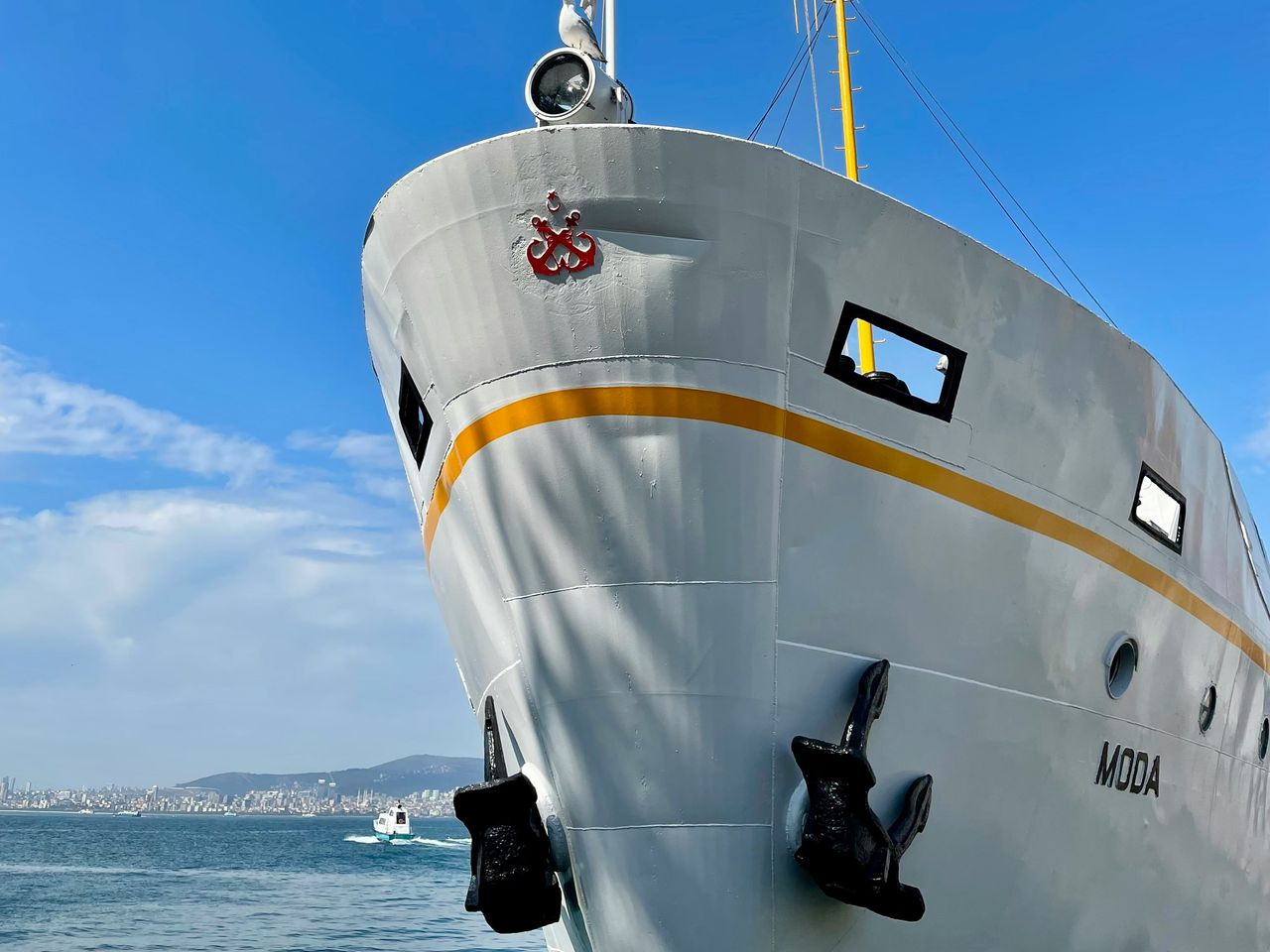
The engineering on a late ship is usually sound. What fails is the management of the project that delivers the engineering — and it fails earliest, in design.
Introduction
The Industry That Moves the World
Roughly ninety percent of global trade by volume travels by sea. Every container ship crossing the Pacific, every tanker carrying crude from the Persian Gulf, every bulk carrier hauling iron ore from Brazil to China, was designed, built, and tested by an industry that seldom attracts public attention. Shipbuilding is not simply a manufacturing sector. It is the physical infrastructure of globalisation, the material foundation on which international commerce depends.
The scale is difficult to grasp. In 2025, China alone completed 53.69 million deadweight tons of shipbuilding, accounting for 56.1 percent of global output. Its order backlog reached a record 274.42 million deadweight tons, equal to 66.8 percent of global outstanding orders. New orders hit 107.82 million deadweight tons, representing 69 percent of the global market. The global shipbuilding market was valued at approximately $157 billion in 2025 and is projected to reach over $206 billion by 2031. These are not abstract figures. They represent ships that will carry the food, fuel, and manufactured goods on which billions of people depend.
Yet the industry that builds these vessels is in trouble. Not everywhere, and not uniformly, but in the places where it matters most for Western defence and industrial capacity, the sector is struggling. The Economist has reported that America's commercial shipbuilding industry "barely registers" on the global stage, and that this absence "hamper[s] the ability of its navy to keep pace" with China's expanding fleet. Over the past quarter-century, China's share of global shipbuilding tonnage has risen from five percent to over fifty percent, while the United States has ceded almost all of its commercial shipbuilding capacity. The consequences are not merely commercial. They are strategic.
The Problem of Project Performance
Against this backdrop, the persistent failure of shipbuilding projects to deliver on time and on budget becomes more than an industrial problem. The U.S. Government Accountability Office has documented, across two decades of audits, that Navy shipbuilding programmes "have consistently fallen short of expectations," with lead ships experiencing cost growth ranging from 23 percent to 150 percent and schedule delays measured in years. The Navy's Shipyard Infrastructure Optimization Program, intended to modernise the four public shipyards that maintain the nuclear-powered fleet, is now projected to exceed $200 billion and take more than fifty years to execute, nearly ten times the original estimate and decades longer than planned.
These failures are not confined to naval shipbuilding. The Ferguson Marine ferries in Scotland, the Type 31 frigate programme in the United Kingdom, the Constellation-class frigate in the United States, all have experienced substantial cost overruns and schedule delays. The pattern is so consistent that it has become almost expected. As one recent analysis put it, the industry is "plagued by legacy norms around slow and siloed decision making."
What makes these failures frustrating is that they are not, for the most part, technological failures. The engineering knowledge to design and build ships exists. The industrial capacity to fabricate steel and install machinery exists. What fails is the project management system that is supposed to integrate design, procurement, construction, and testing into a coherent whole. The problem is not that ships cannot be built. The problem is that they cannot be built on time, on budget, and to specification with sufficient consistency.
Thesis and Argument
This essay argues that the successful delivery of a ship, from initial concept to final sea trials, is not merely a feat of engineering but a profound exercise in integrated project management. The essence of shipbuilding project management lies in the synchronisation of a unique, project-based lifecycle, the proactive management of risk and stakeholders, and the strategic deployment of digital tools to navigate inherent uncertainty.
The argument proceeds through five chapters, each examining a distinct dimension of the shipbuilding project lifecycle. Chapter 1 establishes the conceptual foundation by examining what makes shipbuilding projects fundamentally different from other large-scale engineering endeavours: their engineer-to-order nature, their iterative design spiral, their long duration and capital intensity, and the triangular relationship among owner, designer, and shipyard that characterises most newbuilding contracts.
Chapter 2 examines the design phase, arguing that this is where project management value is most decisively created or destroyed. The evidence from Ferguson Marine, the Type 31 programme, and the academic literature on late design changes all points to the same conclusion: proceeding to construction with an immature design is the single most reliable way to generate cost overruns and schedule delays. The project manager must act as the guardian of design maturity, resisting commercial pressures to start construction before the design is ready.
Chapter 3 turns to the construction phase, where the plans of designers confront the stubborn physicality of steel and labour. This chapter examines the production sequence from steel cutting to launch, the challenges of supply chain and procurement management, the application of advanced scheduling techniques such as Critical Chain Project Management, the shift from reactive inspection to proactive quality control, and the industry's deepening labour crisis.
Chapter 4 analyses the trials phase, where the ship must demonstrate that it is not merely built but functional. Trials are short in duration but disproportionately consequential, the moment when years of accumulated decisions converge on a single, unforgiving test. The chapter examines the architecture of trials from dock trials through sea trials to acceptance trials, the management of deficiencies, and the evolving nature of trials in response to battery propulsion, autonomous systems, and virtual commissioning.
Chapter 5 synthesises the cross-cutting themes that run through every phase: stakeholder management, digital transformation, and integrated risk management. These are not optional add-ons to the phase-specific work of design, construction, and trials. They are the connective tissue that holds the project together.
Scope and Limitations
This essay is not a technical manual. It does not purport to tell naval architects how to design ships or production engineers how to weld steel. It is a work of synthesis and analysis, drawing on academic research, government reports, industry case studies, and practitioner testimony to identify the project management principles and practices that distinguish successful shipbuilding projects from failed ones. The essay is international in scope, drawing on evidence from Europe, North America, and Asia, though the preponderance of publicly available data on cost overruns and schedule delays comes from U.S. and U.K. naval programmes.
The essay is also not a comprehensive treatment of every aspect of shipbuilding project management. Topics such as contract law, financing structures, and environmental regulation receive less attention than they deserve, not because they are unimportant but because the essay's focus is on the management of the project itself, the integration of scope, schedule, cost, quality, risk, and stakeholders across the lifecycle from design to trials.
The Stakes
The stakes of getting shipbuilding project management right could hardly be higher. The global fleet is aging. The transition to green propulsion, whether LNG, methanol, ammonia, or hydrogen, will require the replacement of thousands of vessels in the coming decades. Naval fleets are expanding in response to geopolitical competition. The shipyards that can deliver vessels on time and on budget will capture this demand. Those that cannot will find themselves relegated to the margins of an industry that is consolidating around a small number of highly capable producers.
But the stakes are not only commercial. Ships are instruments of national power, tools of international trade, and habitats for the people who crew them. A ship delivered late is a trade route underserved, a naval capability deferred, a crew's working conditions compromised. The project manager who understands the essence of shipbuilding project management is not merely delivering a product. They are contributing to the functioning of the global economy and the security of nations. That is a responsibility worth taking seriously.
Chapter 1: The Shipbuilding Project Lifecycle: A Unique Project Management Context
1.1 Introduction: Why Shipbuilding Demands Its Own Project Management Logic
A ship is not a building. It is not a bridge, a factory, or a software system. It is a floating, self-contained, highly regulated environment that must survive decades of saltwater corrosion, structural fatigue, and operational abuse while housing hundreds of people, generating its own power, and performing a specific mission, whether that mission is carrying iron ore from Brazil to China, launching fighter jets, or harvesting oil from beneath the North Sea floor. The moment you accept that fundamental reality, the moment you understand that a ship is a city that moves, you begin to grasp why the project management practices that work in commercial construction or IT development often fall short when applied to shipbuilding.
The numbers tell a story of persistent struggle. The United States Government Accountability Office has documented, over two decades of audits, that Navy and Coast Guard shipbuilding programs "have consistently fallen short of expectations," with programs collectively running "billions of dollars over cost and years behind schedule". McKinsey has estimated that the average cost overrun on large shipbuilding projects sits at roughly twenty percent, and the root cause, according to industry analysts, "isn't bad engineering". The engineering is frequently brilliant. The problem is the management of the project that delivers the engineering. Specific examples are sobering: the first Polar Security Cutter, intended to replace aging icebreakers, saw its construction cost nearly double from an initial $1.3 billion to $2.4 billion, with delivery pushed to at least 2030, roughly six years behind the original schedule and eleven years after contract signing. These are not isolated failures. They are symptoms of a deeper mismatch between the tools and assumptions of conventional project management and the peculiar beast that is a shipbuilding project.
This chapter establishes the conceptual foundation for the entire essay by examining what makes shipbuilding projects fundamentally different from other large-scale engineering endeavours. It is not enough to say that shipbuilding is "complex." Complexity is a word so overused in project management literature that it has lost much of its analytical edge. What we need is a precise understanding of where the complexity comes from, how it manifests across the project lifecycle, and what implications that complexity carries for the project manager who must navigate it. The argument proceeds in four movements. First, I examine the project-based nature of shipbuilding and why each vessel constitutes a unique, one-of-a-kind undertaking rather than a repetitive manufacturing operation. Second, I present the standard lifecycle from concept refinement through design, construction, and delivery, drawing on recent frameworks such as those articulated by the GAO. Third, I explain the design spiral, the iterative methodology that governs how a ship's form emerges from a set of performance requirements. Finally, I identify the key differentiators, including long duration, capital intensity, regulatory oversight, and the triangular relationship between owner, designer, and shipyard, that make shipbuilding project management a discipline in its own right.
1.2 The Project-Based Nature of Shipbuilding: One-Offs, Not Assembly Lines
1.2.1 The Engineer-to-Order Model
When Toyota builds a Camry, it knows exactly what a Camry is. The design is frozen. The supply chain is optimised for repetition. The workers on the assembly line perform the same tasks thousands of times. Economies of scale drive down unit cost, and the project management challenge is essentially one of maintaining rhythm and quality in a steady-state production system.
Shipbuilding, by contrast, operates almost entirely on an engineer-to-order basis. This is a term of art in operations management, and it matters enormously for how projects are planned and controlled. In engineer-to-order environments, "the project delivery complexity is defined by frequent design changes throughout the project execution, and concurrent activities to reduce time to market". The product is not designed before production begins; design and production overlap, and the design continues to evolve while steel is already being cut. The Norwegian shipbuilder VARD, one of the world's most respected builders of specialised offshore vessels, operates in an environment where "vessels may change substantially from contracting to delivery due to frequent and unsystematic client input, as well as by frequent regulatory interventions, all while working on the edge of known technology". The phrase "on the edge of known technology" is not hyperbole. Offshore construction vessels, naval combatants, and research icebreakers routinely incorporate systems and configurations that have never been built before, at least not in that combination.
The consequence for project management is profound. In a repetitive manufacturing environment, the project manager's task is primarily one of variance reduction: keep the process stable, eliminate disruptions, and ensure that each unit conforms to specification. In engineer-to-order shipbuilding, the project manager's task is one of uncertainty navigation. The design will change. The client will introduce new requirements mid-stream. A supplier will fail to deliver a critical component on time. A classification society will issue a new interpretation of a rule that requires redesign of a structural detail. None of these are exceptional events; they are the normal texture of shipbuilding project life. As one study of VARD's operations observed, "planning complexity arises from frequent design changes and advanced design and engineering taking place concurrently with production," and "design uncertainty" is "the major critical element of the planning problem".
1.2.2 The Consequences of Uniqueness
The uniqueness of each vessel has knock-on effects that ripple through every aspect of project management. Consider scheduling. In a construction project with a repeated floor plan, the project manager can use historical data to estimate durations with reasonable confidence: the third floor will take roughly as long as the second, with maybe a ten percent learning-curve improvement. In shipbuilding, even within a series of ostensibly identical vessels, the learning curve is shallow and unpredictable because the external environment shifts between hulls, whether through supplier performance, regulatory changes, or labour availability. The VARD case study notes that "almost every ship is put into engineering and production before all the technical uncertainty is resolved," meaning that the schedule must be built around activities whose scope is not yet fully defined.
Consider procurement. A car manufacturer can negotiate multi-year contracts for components that will be used across millions of vehicles. A shipyard building a single offshore supply vessel may need to source a main engine from one supplier, a dynamic positioning system from another, a crane from a third, and a complex electrical distribution system from a fourth, each of which is customised to the specific vessel and each of which may be on a critical path. The shipbuilding supply chain is not a chain in the linear sense; it is a web of interdependent relationships, and a disruption in any strand can propagate unpredictably. A study of one-of-a-kind shipbuilding supply chains found that "the high complexity of the processes and the unique nature of the ships present challenges for the planning and coordination of the assembly at the shipyard and for production and logistics at the suppliers," leading to "long delivery times and high inventory costs". The project manager in shipbuilding is therefore not merely managing a schedule; they are managing a constantly shifting network of organisational dependencies, each with its own incentives, constraints, and failure modes.
1.2.3 The Tension Between Project and Production Logic
There is an important nuance here that distinguishes shipbuilding from both pure project management and pure manufacturing. As one industry analysis puts it, "Unlike construction projects, shipbuilding tends to be production oriented, as opposed to project oriented". This is a subtle but crucial point. A shipyard is a factory. It has berths, cranes, welding stations, pipe shops, and painting sheds. It has a workforce organised into trades, including welders, fitters, electricians, pipefitters, and painters, who move from vessel to vessel. The yard's management must optimise the utilisation of these fixed resources across multiple concurrent projects. From the yard's perspective, the unit of analysis is not "the ship" but "the berth" or "the crane" or "the labour hour." The ship is a project, but the yard is a production system.
This creates a permanent tension in shipbuilding project management. The project manager for a specific vessel wants to secure the resources, whether cranes, skilled labour, or drydock space, that their ship needs at the moment it needs them. The yard's production planner wants to level the load across all ships under construction, avoiding expensive peaks and idle troughs. These two objectives are not always aligned. A project manager who fights too aggressively for their ship's priorities may damage the yard's overall throughput; a yard planner who ignores project-level critical paths may cause individual ships to miss their delivery dates. Navigating this tension requires a project manager who understands both the project logic and the production logic, and who can negotiate effectively within the organisational matrix. This is not a challenge that appears in the Project Management Body of Knowledge's standard treatment of "project vs. operations," which tends to present the two as separate domains. In shipbuilding, they are inseparable.
1.3 The Shipbuilding Lifecycle: From Concept Refinement to Delivery
1.3.1 A Generic Framework
Despite the enormous variation in ship types, from a 50-metre fishing trawler to a 300-metre aircraft carrier, the broad outlines of the shipbuilding lifecycle are surprisingly consistent across the industry. Recent work by the GAO provides a useful generic framework. Shipbuilding, the GAO notes, is "a complex, multistage industrial activity that includes common key events regardless of the type of ship construction or nature of the buyer". The agency identifies three primary stages: pre-contract, design, and construction, with a series of key events sequenced among them.
The pre-contract phase encompasses everything from the initial expression of interest by a shipowner through concept refinement and feasibility studies to the signing of the construction contract. The design phase begins in earnest after contract award and progresses from basic and functional design through detail design. The construction phase runs from steel cutting and block fabrication through keel laying, launch, and ultimately delivery. This framework is not a rigid template; different yards and different navies use different terminology. But it captures the essential logic: a ship moves from an idea to a set of drawings to a physical structure to a tested and delivered asset.
1.3.2 The Pre-Contract Phase: Where the Die Is Cast
The pre-contract phase deserves far more attention than it typically receives in project management literature. This is the period when the shipowner's requirements are translated into a technical specification, when feasibility is assessed, when the broad parameters of the design are established, and when the contract price and schedule are negotiated. It is, in many ways, the phase where the project's fate is sealed. Research on shipbuilding cost overruns consistently points to design maturity at the time of contract award as a critical predictor of project performance. A design that is insufficiently mature when construction begins will generate a cascade of changes, rework, and delays that no amount of construction-phase heroics can fully absorb.
The GAO's framework places "concept refinement" and "contract award" in the pre-contract phase, with design continuing after contract signing. This captures an important reality: the boundary between pre-contract and design is porous. The shipyard, the designer, and the owner are often engaged in a dance of proposal, counter-proposal, and refinement that continues right up to the moment the contract is inked, and sometimes beyond. The project manager's role in this phase is primarily one of scope definition and risk assessment. They must work with the technical team to ensure that the specification is clear enough to be priced and scheduled realistically, but not so rigid that it prevents sensible trade-offs during detailed design. They must also assess the risks inherent in the project, including technical risks, supply chain risks, and regulatory risks, and ensure that these risks are reflected in the contract terms and the project contingency.
1.3.3 The Design Phase: The Spiral in Motion
Once the contract is signed, the design phase accelerates. In the GAO's generic framework, this phase includes "basic and functional design" followed by "detail design". In practice, the design process is more iterative and overlapping than this linear description suggests. This is where the design spiral becomes the organising metaphor.
The design phase is not merely a technical exercise. It is a project management challenge of the highest order because it is the phase where interdependencies are most intense and most poorly understood. A change in the ship's main dimensions, for example, affects structural scantlings, which affects weight distribution, which affects stability, which affects the placement of ballast tanks, which affects the routing of piping systems, which affects the layout of accommodation spaces. The design team must manage these interdependencies across dozens of engineering disciplines, often working in parallel, often under time pressure, and often with incomplete information. The project manager's role is to create the conditions in which this integration can happen: establishing clear interfaces between disciplines, ensuring that design reviews are conducted at the right moments, and preventing the fragmentation of design information that leads to costly late-stage changes.
1.3.4 The Construction Phase: Steel Meets Reality
The construction phase is where the abstract world of drawings and calculations confronts the stubborn physicality of steel, machinery, and human labour. The GAO describes the construction sequence with admirable clarity: steel plates are cut and welded into "blocks," which form completed or partial compartments such as engine rooms, storage areas, and accommodation spaces. These blocks are outfitted with pipes, brackets, cables, and equipment before being welded together into larger sections. The keel is laid in the drydock, and the ship is erected section by section.
From a project management perspective, the construction phase is characterised by resource intensity, spatial constraints, and the challenge of concurrency. Multiple trades, including structural welders, pipefitters, electricians, painters, and riggers, must work in the same confined spaces, often on different systems, often at the same time. A delay in one trade cascades to others. A shortage of crane capacity can idle an entire block assembly line. The project manager must manage not only the schedule but the space in which the schedule unfolds. This is a dimension of project management that is largely absent from generic PMBOK discussions but is central to shipbuilding practice.
1.3.5 The Trials and Delivery Phase: The Ultimate Test
The final phase of the shipbuilding lifecycle, trials and delivery, is dealt with in detail in Chapter 4 of this essay, but it is worth noting here as part of the lifecycle overview. Trials are the moment of truth. The ship must demonstrate that it meets contractual performance requirements for speed, manoeuvrability, endurance, and systems functionality. Dock trials test systems while the ship is moored; sea trials test the vessel in its natural environment. The project manager's role during trials is one of coordination under pressure: assembling the right people, ensuring that test procedures are understood, and establishing a rapid mechanism for resolving the defects that inevitably emerge. The trials phase is short in duration but disproportionately important in determining whether the project is judged a success or a failure.
1.4 The Design Spiral: The Intellectual Engine of Ship Design
1.4.1 Origins and Logic
No discussion of the shipbuilding lifecycle is complete without an understanding of the design spiral. The concept was introduced by J. Harvey Evans in 1959 and has become the canonical model of the ship design process. The fundamental insight is deceptively simple: ship design is not a linear sequence of steps from requirements to drawings. It is an iterative process in which the designer moves repeatedly around a cycle of interrelated decisions, each pass through the spiral refining the design to a greater level of detail and fidelity.
The spiral metaphor captures several essential features of the process. First, convergence: each iteration brings the design closer to a feasible solution. Second, interdependence: every decision affects every other decision, so the designer cannot simply "finish" one aspect of the design before moving to the next. Third, progressive refinement: the design starts with broad parameters and gradually acquires detail, but the broad parameters may themselves be revisited as detailed analysis reveals problems or opportunities.
1.4.2 The Four Phases of Design
The design spiral is conventionally divided into four phases. The first is concept design, in which the fundamental question is answered: what is this ship for? "In this phase it is first defined which task the ship is going to perform. For example, should it transport passengers or freight? Furthermore, the requirements of the client are determined". The concept design establishes the general dimensions, the block coefficient, and the required power, and it performs an initial feasibility check. The output is not a detailed design but a proof that a ship capable of meeting the owner's requirements can be built within the owner's budget and schedule.
The second phase is preliminary design, in which the concept is elaborated. "The aim of this phase is a more extensive elaboration of the concept design. This also includes an exact definition of the main specifications of the ship. Length, width, draught, side height, block coefficient and power are determined according to the client's requirements and considering economic aspects". Preliminary design also includes the first serious hydrodynamic analysis, such as model tests in a towing tank, to validate the hull form's performance.
The third phase is contract design. This is the design that forms the basis of the contract between the owner and the shipyard. It includes "all relevant calculations and shipbuilding drawings" and the technical specifications that define what the shipyard is obligated to deliver. The contract design must be detailed enough to support a firm price and schedule, but it is not yet the level of detail required for construction.
The fourth phase is detailed design. Here the design becomes construction-ready. "The detailed design of all structural elements of the ship is carried out. This is followed by the configuration of all technical specifications for the construction of the ship and equipment". The detailed design produces the drawings and specifications that the shipyard's trades will use to actually build the vessel.
1.4.3 Criticisms and Limitations
The design spiral is a powerful heuristic, but it is not without its critics. As one source notes, "the design spiral does not envisage any change in requirements or decisions already made; it merely describes the degree of detail of the design". This is a serious limitation in practice. Owners do change their requirements. Regulators do introduce new rules mid-design. The spiral's implicit assumption of a stable requirement set does not match the reality of most shipbuilding projects. A more recent assessment concluded that "the ship design spiral is a misleading and unreliable representation of complex ship design at both the strategic and detailed iterative levels".
For the project manager, the lesson is not that the design spiral is useless, but that it must be supplemented with explicit mechanisms for managing change. The spiral describes the technical process of refining a design; it does not describe the managerial process of controlling scope, managing stakeholder expectations, and accommodating uncertainty. These are project management functions, and they must operate alongside and around the spiral, not as an afterthought.
1.5 Key Differentiators: What Makes Shipbuilding PM Different
1.5.1 Long Duration and Capital Intensity
The first differentiator is simply the scale of the undertaking. A large commercial vessel or naval ship takes years to design and build. Attack submarines that once took six years to construct now take nine; aircraft carriers that once took eight years now require eleven. The capital invested in a single vessel can run into the billions of dollars. The Polar Security Cutter example cited earlier, at $2.4 billion for a single icebreaker, is not an outlier in naval shipbuilding.
Long duration has several project management consequences. It means that the project team will experience turnover; key personnel will leave or be reassigned, and institutional knowledge must be preserved through documentation and process discipline. It means that the external environment will change during the project's life: material prices will fluctuate, regulations will evolve, the owner's strategic priorities may shift. It means that financing costs become a significant component of total project cost. And it means that the project manager must maintain momentum and morale over a period measured in years, not months, which is a leadership challenge as much as a technical one.
1.5.2 Regulatory and Classification Society Oversight
The second differentiator is the pervasive presence of external oversight. Unlike a commercial building, which is inspected by local authorities at discrete milestones, a ship is subject to continuous scrutiny by a classification society from the moment of design through the final sea trials. Classification societies, including ABS, DNV, Lloyd's Register, and Bureau Veritas, are private organisations that establish and enforce technical standards for the design, construction, and operation of ships. Their rules cover structural strength, stability, machinery, electrical systems, fire safety, and a host of other domains.
The classification society's role in a newbuilding project is not merely that of a regulator issuing approval stamps. As one description puts it, the society "will typically communicate with the Hull, topsides and mooring designer and constructing yards" and is "therefore able to compare and act as integrating facilitator transferring and comparing data from one contractor to the other". In other words, the classification society can function as a technical integrator across the project's organisational boundaries. This is a role that has no direct analogue in conventional construction project management. The project manager must manage the relationship with the classification society as carefully as they manage the relationship with the owner, because the society's approval is a prerequisite for every major milestone.
1.5.3 The Owner-Designer-Shipyard Triangle
The third differentiator is the contractual and organisational structure of the typical shipbuilding project. In the simplest case, the shipowner contracts directly with a shipyard, and the shipyard manages the design in-house. But in practice, the structure is often more complex. A shipowner may engage a separate design firm, sometimes called a design agent, to develop the concept and contract design, and then tender the construction to a shipyard. The shipyard may then engage its own detail design subcontractor. The result is a triangular relationship among owner, designer, and shipyard, each with its own contractual obligations, commercial incentives, and technical perspectives.
Research on this structure reveals its inherent tensions. In one detailed case study, "the ship designer led the negotiation with the shipowner, contractually, it is the shipyard that has the obligation to deliver the vessel to the shipowner. The shipyard has signed a contract with the ship designer only to deliver the drawings and specifications". The designer also procured major equipment items directly from suppliers, while the shipyard contracted with other suppliers for minor items. The project thus involved "a significant level of interdependence between activities which are difficult to streamline because these activities are not performed at the same company". A problem in one organisation affects the others, and negotiations across organisational boundaries are frequently required to resolve conflicts.
For the project manager, this triangle is a permanent feature of the landscape. It requires skills in contract management, interface coordination, and stakeholder diplomacy that go far beyond the technical management of the ship itself. The project manager must understand where contractual risk sits, where authority resides, and how to align the incentives of parties whose formal interests may diverge.
1.5.4 Design Uncertainty as the Central Planning Problem
Perhaps the most important differentiator, and the one that ties together the others, is the centrality of design uncertainty to the planning problem. In conventional project management, the scope is defined, the schedule is built, and the task of execution is to deliver against the plan. In shipbuilding, the plan must be built around an evolving design. The VARD study put it starkly: "design uncertainty is the major critical element of the planning problem; future decisions are conditioned on the future realization of the uncertain design".
This has a profound implication for how the project manager thinks about planning. A schedule that assumes a stable scope is not merely inadequate; it is actively dangerous, because it creates a false sense of control. The shipbuilding project manager must instead build schedules that are robust to design change, with buffers, with flexible sequencing, and with explicit provisions for rework. They must also create organisational mechanisms for absorbing the shock of change: cross-functional teams that can make rapid decisions, information systems that keep design and production data synchronised, and a culture that treats change as normal rather than exceptional.
1.6 Implications for the Project Manager
What, then, does all of this mean for the person who actually has to manage a shipbuilding project? The implications can be grouped into three broad areas: competence, organisation, and mindset.
1.6.1 Competence
The shipbuilding project manager must be technically literate. They do not need to be a naval architect or a marine engineer, but they must understand enough of the technical domain to ask the right questions, to recognise when a design decision carries schedule or cost implications, and to communicate credibly with the specialists who report to them. They must also be commercially astute, because shipbuilding projects are commercial undertakings with thin margins and high stakes. And they must be organisationally skilled, because the project's success depends on their ability to navigate the matrix of relationships among owner, designer, yard, suppliers, and classification society.
1.6.2 Organisation
The organisational implications are equally significant. Shipbuilding projects require a project management structure that can handle concurrency and uncertainty. This typically means a matrix organisation in which functional departments, including engineering, procurement, and production, provide resources to projects, and project managers integrate those resources toward a common goal. But the matrix must be managed carefully to avoid the fragmentation that occurs when functional loyalties override project priorities. The project manager must have sufficient authority to resolve conflicts and make trade-offs, while still respecting the legitimate expertise and concerns of the functional managers.
1.6.3 Mindset
Finally, and perhaps most fundamentally, the shipbuilding project manager must adopt a mindset that embraces uncertainty rather than seeking to eliminate it. The instinct of many project managers, trained in conventional methods, is to try to freeze the scope, lock down the schedule, and minimise change. In shipbuilding, this instinct is counterproductive. Change is inevitable. The question is not how to prevent it but how to manage it, how to absorb its shocks, how to learn from it, and how to keep the project moving toward delivery despite it. This requires a certain intellectual humility: a willingness to acknowledge that the plan will be wrong, and a commitment to building systems and relationships that can adapt.
1.7 Conclusion: The Essence of the Context
This chapter has laid the conceptual groundwork for the chapters that follow. The central argument is that shipbuilding projects are not merely "complex" in the generic sense that all large projects are complex. They are distinctive in ways that have direct and specific implications for project management practice.
The distinctiveness begins with the engineer-to-order nature of the product: each ship is a one-off, designed and built under conditions of persistent design uncertainty. It continues with the design spiral, which describes an iterative technical process that must be managed alongside, not instead of, the project management processes of scope, schedule, and cost control. It is reinforced by the long duration and capital intensity of shipbuilding projects, which amplify the consequences of every managerial decision. It is structured by the triangular relationship among owner, designer, and shipyard, which creates interface risks and contractual complexities that have no counterpart in simpler project structures. And it is constrained by the continuous oversight of classification societies, whose rules and approvals govern every phase of the work.
The project manager who understands these distinctives is better equipped to navigate the challenges that lie ahead. The chapters that follow will examine each phase of the lifecycle in detail, covering design, construction, and trials, and will explore the cross-cutting themes of stakeholder management, digital transformation, and integrated risk management that bind the phases together. But the foundation has been laid here. The essence of shipbuilding project management begins with the recognition that a ship is not a building, and that managing its creation requires a discipline adapted to the peculiar demands of the sea.
Chapter 2: The Design Phase: Where Project Management Value is Created or Destroyed
2.1 Introduction: The Phase That Determines Everything
There is a moment in every shipbuilding project, often unrecorded and rarely celebrated, when the fate of the entire undertaking is effectively decided. It does not happen at keel laying, when the first steel plate is ceremonially positioned in the drydock. It does not happen at launch, when the hull slides into the water for the first time. It happens much earlier, in design offices and meeting rooms, during a period that most project management frameworks treat as a preparatory phase rather than the main event. The design phase is where shipbuilding projects are won and lost, and yet it is routinely under-managed, under-resourced, and misunderstood by organisations that claim to take project management seriously.
The evidence for this claim is not anecdotal. It is embedded in the public records of project failures across multiple nations and ship types. When Ferguson Marine's interim CEO gave evidence to the Scottish Parliament about the Glen Sannox and Glen Rosa ferries, vessels whose costs had roughly doubled from an initial £97 million for two ships to over £172 million for one, he identified the root cause with unusual directness. The problem, he said, was "decisions made to get busy in the build, and therefore starting the build when the design was not mature". When the design is immature at the point of construction start, he explained, "you have material issues of what we are ordering and what we are buying to match that design, and you start to build knowing that some feedback might get into the supply chain, meaning that what we are building needs to be reworked". These are not the words of an outside critic. They are the words of someone responsible for cleaning up the mess.
The pattern repeats across the industry. Babcock's £140 million charge on the Type 31 frigate programme in 2026 was explicitly attributed to "higher than expected levels of rework as a result of changes to the design," with the work being performed "in the later stages of completion" where modifications are most expensive and disruptive. The U.S. Government Accountability Office has documented, across two decades of audits, that "building before design maturity" is a recurring cause of cost growth in Navy shipbuilding programmes, and that expert witnesses have urged the Coast Guard to achieve 100 per cent design maturity before starting construction on major cutters.
What makes these failures particularly frustrating is that they are not technological mysteries. They are management failures. The engineering knowledge to design a ferry or a frigate exists. The industrial capacity to build it exists. What fails is the project management system that is supposed to integrate design, procurement, and production into a coherent whole. The design phase is where that integration either happens or doesn't. And when it doesn't, no amount of construction-phase effort can fully compensate.
This chapter argues that the design phase is where project management value is most decisively created or destroyed. It proceeds in five parts. First, I examine the pre-contract phase, where the fundamental parameters of the project are established and where the project manager's primary responsibility is scope definition and risk assessment. Second, I analyse the management of the design process itself, focusing on the challenge of design maturity and the critical role of the project manager in preventing premature design freeze. Third, I address the twin challenges of interface management and design for production, the technical and organisational mechanisms that determine whether a design can actually be built efficiently. Fourth, I examine the human element in design, including the persistent failure to integrate the end users of the vessel into the design process. Finally, I consider the cost of design errors and draw the conclusions that follow.
2.2 The Pre-Contract Phase: Where Requirements Become Commitments
2.2.1 The Nature of Pre-Contract Work
The pre-contract phase of a shipbuilding project is deceptively important. On the surface, it appears to be a period of exploration and negotiation, during which the shipowner and the prospective builder discuss what might be built and at what price. In reality, it is the period during which the most consequential decisions are made, decisions that will constrain every subsequent choice and determine the project's ultimate feasibility.
Deltamarin, one of Europe's leading ship design firms, describes the pre-contract design process as encompassing three overlapping activities: feasibility assessment, outline project development, and contract project development. The feasibility project, in Deltamarin's formulation, aims "to create the initial vessel design for the ship owner, assessing the required investment and concept feasibility," developing "the ship design concept with main dimensions, layout, hull form, and cost estimates to evaluate the technical and commercial feasibility of the concept". The outline project then takes the concept "to a level suitable for shipyard tendering purposes," ensuring "consistent and comparable proposals from the shipyards". The contract project finalises "a comprehensive technical specification and supporting documents for the eventual shipbuilding contract".
This is not a linear sequence. It is an iterative process in which the owner's requirements, the designer's technical assessments, and the market conditions interact and evolve. A vessel that is technically feasible may not be commercially viable at the price the owner is willing to pay. A design that meets the owner's operational requirements may not be buildable within the schedule the shipyard can offer. The project manager's role in this phase is to hold these tensions together and to ensure that the eventual contract reflects a realistic assessment of what can be delivered.
2.2.2 Front-End Loading and the Cost of Knowledge
The concept of front-end loading (FEL), borrowed from the construction and process industries, provides a useful framework for understanding the pre-contract phase in shipbuilding. FEL refers to "the process of developing sufficient strategic information" to make informed decisions about a project's scope, cost, and schedule before committing to execution. In shipbuilding, as in other complex capital projects, the quality of front-end planning is a strong predictor of project performance.
The logic is straightforward: "An increase of knowledge in the early design stages will definitely require less costly design changes in later stages and should reduce the risk of modifications during or after the building process". The cost of making a design change grows exponentially as the project progresses. A decision to alter the ship's layout during concept design may cost a few thousand dollars in engineering time. The same decision, made after steel has been cut, may cost millions in rework, material waste, and schedule delay. The implication for project management is clear: the project manager must fight for sufficient time and resources in the pre-contract phase to achieve design maturity, even when commercial pressures push for a faster commitment.
This is easier said than done. In a competitive shipbuilding market, owners have significant leverage, and shipyards are often tempted to accept contracts before the design is sufficiently mature because they fear losing the work to a competitor. The Ferguson Marine case is a textbook illustration. The original contract for the two ferries was signed at a price that subsequent analysis revealed to be unrealistically low, based on a design that was far from mature. The interim CEO's testimony identified "an underestimation of scope and design effort" as a primary cause of the cost escalation. The shipyard had committed to building something that had not yet been adequately designed.
2.2.3 The Project Manager's Responsibilities in Pre-Contract
What, then, should the project manager be doing during the pre-contract phase? Three responsibilities stand out.
The first is scope definition. The project manager must work with the technical team to ensure that the specification captures what the owner actually needs, not merely what the owner has articulated. This requires careful elicitation of requirements, including the operational profile of the vessel, the regulatory environment in which it will operate, and the maintenance and crewing assumptions that underpin its lifecycle cost. The GAO's recent work on leading practices in shipbuilding emphasises that commercial builders "facilitate a shorter design and construction cycle by rapidly selecting vendors and managing the timely receipt of associated vendor-furnished information". The implication is that scope definition is not just about the ship itself; it is about the entire supply chain that will deliver the ship's systems.
The second responsibility is risk assessment. The project manager must identify the technical, commercial, and organisational risks inherent in the project and ensure that these risks are reflected in the contract terms and the project contingency. This includes risks associated with design maturity, supplier performance, regulatory change, and labour availability. The pre-contract phase is the last opportunity to price risk into the contract before the project's financial parameters are locked in.
The third responsibility is stakeholder alignment. The project manager must ensure that the owner, the designer, the shipyard's senior management, and the key suppliers share a common understanding of the project's objectives, constraints, and risks. This is not merely a matter of communication; it is a matter of negotiation. Different stakeholders have different priorities, and those priorities must be reconciled before the project begins in earnest. Research on ship design projects has shown that "for integration of stakeholders to effectively handle design project uncertainty, individual project goals needs to be aligned" and that this alignment must be established "through the project pre-planning phase".
2.3 Managing the Design Process: The Project Manager as Guardian of Maturity
2.3.1 The Design Spiral and Its Managerial Implications
Chapter 1 introduced the design spiral as the technical process by which a ship's form emerges from a set of performance requirements. From a project management perspective, the spiral has several important implications that are not immediately obvious.
The first is that design is not a discrete phase that can be scheduled and completed. It is a continuous process of refinement that overlaps with procurement and production. The spiral metaphor captures this: each iteration builds on the last, and the transition from one phase to the next is a matter of diminishing returns rather than a sharp boundary. The project manager who treats design as a box to be ticked before construction begins will be perpetually frustrated by the reality that design decisions continue to be made, and changed, long after steel cutting has commenced.
The second implication is that design maturity is not a binary state but a continuum. A design can be "80 per cent mature" in the sense that most of the major systems and arrangements have been defined, while critical details remain unresolved. The question that the project manager must answer is not "is the design finished?" but "is the design mature enough to support the next phase of work without incurring excessive risk of rework?" This is a judgement call, and it requires the project manager to understand both the technical state of the design and the production consequences of design uncertainty.
The third implication is that the design spiral reinforces organisational silos. As the Siemens analysis of the spiral's limitations observes, "while the spiral looks like a smooth, continuous process, it is actually made up of separate items. Each of these involves a different team, focused on one aspect of ship design and performance. Teams generally use different tools and different data sets. This work configuration blocks collaboration and leads to silos when passing information between teams". The design spiral describes a technical process that can be executed in a fragmented organisational environment. The project manager's job is to counteract that fragmentation by creating mechanisms for cross-disciplinary integration.
2.3.2 The Consequences of Immature Design
The consequences of proceeding to construction with an immature design are well documented and consistently severe. The Aalto University study on late design changes in shipbuilding found that "late revisions are a recurring problem" and that "revisions often take place after the following design stage has already begun, which leads to changes affecting later design stages". In departments with the highest number of delays, "a clear impact on the design hours budget was observed," and "revisions were identified as a major contributing factor to delays in the design process".
The Type 31 frigate programme provides a more recent and equally instructive case. Babcock's £140 million charge on the programme was attributed to design changes that "can disrupt block construction, outfitting, cabling, compartment access, combat-system integration, and testing". The critical phrase is "late changes can affect multiple suppliers and create sequencing issues that spread through the yard". A design change does not simply alter a single drawing; it propagates through the entire production system, affecting procurement, fabrication, assembly, and testing. The project manager who fails to control design change is not merely managing a technical problem; they are managing a systemic organisational disruption.
The Ferguson Marine evidence adds a further dimension: the interaction between design immaturity and supply chain risk. The interim CEO explained that when the design is not mature, "you have material issues of what we are ordering and what we are buying to match that design". In other words, immature design leads to premature procurement, which leads to materials and equipment that may not fit the final design, which leads to rework and waste. The supply chain becomes a source of risk rather than a source of value.
2.3.3 The Project Manager's Role in Design Maturity
The project manager's role in managing design maturity can be summarised in three functions: gating, buffering, and escalating.
Gating means establishing formal decision points at which the design's maturity is assessed against predefined criteria before the next phase of work is authorised. These gates should be defined in terms of specific deliverables, such as drawings approved, interfaces frozen, or vendor data received, rather than vague statements that the design is "sufficiently advanced." The GAO's work on leading practices in shipbuilding emphasises that commercial builders use "risk-based decisions to off-ramp design features" when those features present "significant risk to achieving the ship delivery date". The gate review is the mechanism through which such decisions are made and documented.
Buffering means building schedule and budget contingencies that reflect the reality of design uncertainty. A schedule that assumes no design changes will be wrong. A budget that assumes no rework will be inadequate. The project manager must ensure that the project's baseline includes realistic provisions for the design iterations that will inevitably occur. This is not a matter of pessimism; it is a matter of realism. The Aalto study's recommendation of "a revision risk score that can be used by the management to identify problematic revisions at an early stage" is an example of the kind of practical tool that supports buffering.
Escalating means creating a mechanism for raising design issues to the appropriate level of authority when they cannot be resolved at the working level. Design disputes often involve trade-offs between performance, cost, and schedule that exceed the authority of the engineers involved. The project manager must ensure that these trade-offs are made consciously and at the right level, rather than being buried in technical compromises that later prove unworkable.
2.4 Interface Management and Design for Production: The Technical Foundations of Buildability
2.4.1 The Challenge of Interface Management
A modern ship is not a single system. It is a system of systems: propulsion, electrical distribution, navigation, communication, combat (in naval vessels), HVAC, plumbing, fire suppression, and dozens of others. Each of these systems has its own design logic, its own regulatory requirements, and its own set of suppliers. The challenge of interface management is to ensure that these systems work together: that the electrical power supplied to a radar is compatible with the radar's requirements, that the cooling water routed to a generator has sufficient capacity, that the data protocols used by the navigation system can communicate with the combat system.
The consequences of interface failure are not merely technical. They are project management failures. A study of interface management in naval ship design notes that "the identification of all interface points essential to system integration" requires "a project-wide Interface Control Documentation (ICD) system" that is instituted and policed with discipline. The ICD is the formal record of what each system expects from and provides to the others. Without it, interface assumptions remain implicit, and implicit assumptions are the seed of rework.
In the shipbuilding context, interface management is complicated by the fact that the interfaces span organisational boundaries. The main engine supplier has an interface with the ship's electrical system, which may be designed by a different firm and built by a different subcontractor. The combat system integrator has interfaces with the ship's cooling system, its power system, and its structural arrangements. Each of these interfaces must be defined, agreed, and verified. The project manager's role is to ensure that the interface management process is adequately resourced and that interface issues are resolved before they become production problems.
2.4.2 Design for Production: Bridging the Design-Production Divide
If interface management is about making systems work together, design for production (DFP) is about making the ship buildable. The concept, imported from manufacturing industries, refers to the practice of designing a product with its production process in mind. In shipbuilding, DFP means designing structural arrangements, piping routes, and equipment installations in ways that minimise fabrication complexity, reduce part count, and facilitate efficient assembly.
The potential benefits of DFP are substantial. Estimates of the potential benefit on ship production cycle time and cost, when DFP is applied throughout the design and engineering process, "range from 10 to 25% (even higher in some cases)". The National Shipbuilding Research Program has funded multiple projects aimed at incorporating DFP methodologies into the ship design process, with goals including "a 10% reduction in structural part count and a 16% reduction in detailed design lead time".
Yet DFP remains under-implemented in many shipyards. The fundamental problem, as one analysis puts it, is that "many ship design groups continue to work in isolation from shipyard production influence and do not take into account the producibility of their designs". This isolation is partly organisational, since designers and production engineers report through different chains of command, and partly cultural. Designers are trained to optimise for performance, not for producibility. They focus on whether the ship will meet its speed and stability requirements, not on whether the structural arrangement will require excessive welding or awkward access for pipefitters.
The project manager's role in DFP is to create the organisational conditions in which design and production can interact. This may involve co-locating design and production engineers, establishing formal producibility review processes, or using digital tools that allow production constraints to be visualised during design. The SSI analysis of the engineering/planning/production interface argues that "an efficient engineering/planning/production interface is one that enables both engineering and planning to run collaborative and independent workflows with each discipline choosing when to incorporate change". The project manager must design and maintain that interface.
2.5 The Human Element: The Users Who Are Never Consulted
2.5.1 The Gap Between Design and Operation
There is a persistent and troubling gap in ship design between the people who design ships and the people who operate them. The gap is not new, but its consequences are increasingly well documented. The Nautical Institute, presenting at the International Maritime Organization, "highlighted significant gaps in the engagement between designers and end-users, with many seafarers reporting limited involvement in the design process and insufficient opportunities to provide feedback on workplace challenges". This is not a matter of designers being deliberately negligent. It is a systemic failure to incorporate operational knowledge into the design process.
The consequences of this gap are not merely abstract. Poorly designed interfaces, awkward equipment placement, and inadequate consideration of maintenance access all impose costs on ship operators throughout the vessel's life. A report from Fraunhofer notes that "when something happens, human error is usually the cause, according to the latest studies, in 80 percent of the accidents" and that "the reason often lies in the lack of communication or understanding between crews and engineers, who build the vessels and approve them". The word "communication" is doing a lot of work in that sentence. What it means is that the people who know how a ship is actually operated are not systematically involved in the process of designing it.
2.5.2 The Case for Human-Centred Design
Human-centred design (HCD) offers a systematic approach to closing this gap. HCD is a design philosophy that prioritises the needs, capabilities, and limitations of the people who will use the product. In the maritime context, this means involving seafarers, or people with recent seafaring experience, in the design process, testing design concepts in realistic simulations, and treating operational feedback as a primary source of design input.
The case for HCD in shipbuilding is both ethical and practical. Ethically, it is difficult to justify designing a workplace for hundreds of people without consulting those people about what works and what doesn't. Practically, HCD reduces the risk of design errors that are only discovered during operation, when they are most expensive to correct. As one industry analysis puts it, "by integrating crew feedback early in the design process, potential issues can be identified long before construction begins".
The obstacles to HCD in shipbuilding are considerable. Shipyards operate under tight schedules and competitive pressures. Involving seafarers in the design process takes time and money. Designers may be sceptical of operational input, viewing it as anecdotal or technically uninformed. And the organisational separation between the shipyard and the eventual operator means that there may be no natural channel through which operational experience can flow into the design process. The project manager's role is to create that channel and to insist that operational input is treated as a legitimate design requirement.
2.6 The Cost of Design Errors: What the Numbers Tell Us
The final question for this chapter is the most fundamental: what does design failure actually cost? The answer, based on the available evidence, is that it costs a great deal.
The Aalto study found that late design changes directly affected the design hours budget and were "a major contributing factor to delays in the design process". The Ferguson Marine experience suggests that the cost of design rework can consume a substantial portion of a project's total budget. The interim CEO testified that "over 50 per cent, about £35 million, of the increases over the last 18 months on Glen Sannox have come directly from re-working the design". In other words, more than half of the cost growth on one of the most troubled shipbuilding projects in recent UK history was attributable to design problems.
The Type 31 frigate charge of £140 million provides another data point. Babcock's disclosure stated that the cost increase "is primarily driven by work on the first ships in the program, where outfitting and commissioning stages have required more rework than originally planned" and that this "has been compounded by design changes introduced during construction". The word "compounded" is important. Design changes do not exist in isolation. They interact with other sources of rework and delay, creating a cascade of consequences that is difficult to attribute to any single cause. This is what makes design failures so insidious: their effects are distributed throughout the project, and their full cost is often not recognised until it is too late.
The broader literature on design errors suggests that the cost of correcting a design defect increases by an order of magnitude or more as the project progresses. One source estimates that "in the implementation phase, an error costs US$50, whereas in the early design phase it is only US$3.5". Another notes that "about 20-70% of the design time is spent to correct and redesign product data due to late-detected errors". These figures are not precise, and they vary by context, but they point in the same direction: the earlier a design error is caught, the cheaper it is to fix. This is the fundamental economic argument for investing in design maturity and for resisting the temptation to start construction before the design is ready.
2.7 Conclusion: The Design Phase as Project Management's Moment of Truth
This chapter has argued that the design phase of a shipbuilding project is where project management value is most decisively created or destroyed. The argument rests on four observations.
First, the pre-contract phase is not a preliminary to the "real" project but the period during which the project's fundamental parameters are established. The project manager's responsibilities in this phase, including scope definition, risk assessment, and stakeholder alignment, determine the quality of the foundation on which everything else is built.
Second, the management of design maturity is the central project management challenge of the design phase. The evidence from Ferguson Marine, the Type 31 programme, and the academic literature on late design changes all points to the same conclusion: proceeding to construction with an immature design is the single most reliable way to generate cost overruns and schedule delays. The project manager must act as the guardian of design maturity, resisting commercial pressures to start construction before the design is ready.
Third, the technical and organisational mechanisms of interface management and design for production determine whether a design can actually be built. These are not merely engineering concerns; they are project management concerns, because they require the integration of disciplines and functions that are naturally inclined to operate in isolation.
Fourth, the human element in design, meaning the systematic failure to incorporate operational knowledge into the design process, represents a significant and under-recognised source of design risk. Human-centred design offers a framework for addressing this gap, but it requires the project manager to create organisational channels through which operational experience can flow into the design process.
The cost of failing to manage these dimensions of the design phase is measured in the hundreds of millions. It is measured in ships that are delivered years late, at double their budgeted cost. And it is measured in the erosion of institutional confidence that occurs when project after project fails to deliver on its promises. The design phase is not merely the beginning of a shipbuilding project. It is the phase in which the project's success or failure is largely determined. The project manager who understands this, and who acts on it, has already taken the most important step toward delivering a successful ship.
Chapter 3: The Construction Phase: Orchestrating Complexity on a Massive Scale
3.1 Introduction: Where Plans Meet Steel
The construction phase of a shipbuilding project is where everything that was promised during design confronts the intractable realities of steel, labour, and time. It is the longest phase of the project, the most resource-intensive, and the phase in which the consequences of earlier decisions, good or bad, become most visible. A well-designed ship can still be ruined by poor construction management. A poorly designed ship can rarely be rescued by heroic construction effort, though shipyards try. The construction phase is not merely execution; it is the arena in which the project's fate is sealed.
The scale of the undertaking is difficult to convey in words. At the Meyer Turku shipyard in Finland, the construction of a large cruise ship involves thousands of workers across dozens of trades, thousands of suppliers, and millions of individual components. A single vessel can contain more than 1,200 kilometres of cable, 400 kilometres of piping, and 15,000 individual steel blocks or assemblies. The project manager's task is to orchestrate this immense web of interdependent activities so that the finished ship emerges on time, on budget, and to specification. It is, as one recent master's thesis on shipbuilding project execution put it, a problem of "seamless collaboration across subcontractors, design offices, procurement units, and installation teams operating under strict schedule constraints".
The challenges of construction management in shipbuilding are well documented. The Government Accountability Office has consistently identified construction-phase issues, including rework caused by design instability, supply chain disruption, and labour shortages, as the primary drivers of cost overruns and schedule delays in naval shipbuilding programmes. The Constellation-class frigate programme, which the Navy cancelled in late 2025 after years of delays and cost growth, was undone in part by construction challenges that could not be resolved despite the Navy's best efforts. The programme's cancellation, after the first two ships were already half-built, is a stark reminder that construction phase failures carry existential consequences.
This chapter examines the construction phase in five parts. First, I describe the sequence of pre-production and production activities, from steel cutting to launch. Second, I analyse the challenge of supply chain and procurement management, which is arguably the most underestimated dimension of shipbuilding project management. Third, I examine scheduling and resource management, including the emerging use of Critical Chain Project Management and buffer planning. Fourth, I address quality management, with a focus on Statistical Quality Control and the shift from reactive inspection to proactive prevention. Fifth, I consider the labour dimension, including the industry's deepening skills crisis and its implications for project performance. Throughout, the argument is that the construction phase, despite its apparent focus on physical production, is fundamentally a project management challenge of integration, coordination, and adaptation.
3.2 The Production Sequence: From Steel Plate to Floating Vessel
3.2.1 Pre-Production: The Forgotten Phase
Before a single block is assembled, a great deal of work must be done. The pre-production phase encompasses everything from the receipt of raw materials to the preparation of production documentation and the scheduling of work. It is an area where shipyards often struggle, and where the consequences of poor planning are felt most acutely.
The first step in pre-production is the release of construction drawings from the design office. This is not a simple handover. As Chapter 2 argued, design continues well into construction, and the production team must work with drawings that are still evolving. The shipyard's planning department must sequence work to match the flow of design information, prioritising the early release of drawings for long-lead items and critical-path blocks. This requires close coordination between design and production, and it requires a planning system that can accommodate the uncertainty inherent in design evolution.
Material procurement is the next critical pre-production activity. The shipyard must order steel plates and profiles, piping, cable, equipment, and thousands of other items. The timing of these orders is a delicate balancing act. Order too early, and the yard ties up capital in inventory and risks having materials that do not match the final design. Order too late, and production is delayed waiting for materials. Research on supply chain risk in shipbuilding has identified "material list estimation calculations revised due to minimum order requirements" and "lengthy technical evaluation processes" as among the highest-impact risks affecting procurement schedules. The project manager must understand these risks and build contingency into the procurement schedule.
3.2.2 Block Fabrication: The Building Blocks of the Ship
The physical construction of a ship begins with block fabrication. Steel plates are cut to shape using computer-controlled plasma or laser cutting machines, then formed and welded into flat panels. These panels are stiffened with profiles, including flat bars, angles, or T-sections, to create the structural elements of the hull and superstructure. The panels are then assembled into three-dimensional blocks, which may be as simple as a flat deck section or as complex as a complete engine room module.
The block fabrication process is highly mechanised in modern shipyards, but it remains labour-intensive and quality-sensitive. Welding is the dominant joining process, and welding quality is critical to the structural integrity of the vessel. Statistical Quality Control (SQC) methodologies have been applied to panel line monitoring in shipyards, with the aim of detecting process deviations early and preventing defects before they propagate.
The block fabrication phase is also where the concept of "design for production" discussed in Chapter 2 is tested. A design that has not considered producibility will generate blocks that are difficult to fabricate, require excessive welding, or have awkward geometry that complicates assembly. The National Shipbuilding Research Program has funded multiple projects aimed at improving the interface between design and production, including the development of digital accuracy control systems that connect measurement data from all stages of construction.
3.2.3 Block Assembly and Outfitting
Once blocks are fabricated, they are assembled into larger units on the shipyard's assembly plazas. This is where the ship begins to take shape. Blocks are joined together, and the resulting assemblies are progressively outfitted with pipes, cables, equipment foundations, and other components.
Outfitting is one of the most complex aspects of ship construction. It involves the installation of systems that must ultimately function together: propulsion, electrical distribution, HVAC, plumbing, fire suppression, and in naval vessels, combat systems. The outfitting process is characterised by high spatial density and intense trade interaction. Pipefitters, electricians, welders, and riggers must work in confined spaces, often simultaneously, and their work must be sequenced to avoid interference. A delay in one trade can cascade through the entire outfitting process.
The Chinese cruise ship programme provides an instructive example of how outfitting can be improved through prefabrication and modularisation. For the Adora Flora City, the second domestically built large cruise ship, over 1,100 prefabricated cabins were used, reducing installation time per cabin from 200 hours to 50 hours and shortening the interior outfitting phase by eight months compared with the first ship. A full-ship 3D digital model enabled "virtual shipbuilding," cutting later-stage modification by 80 percent. These are not marginal improvements; they represent a fundamental shift in how construction is planned and executed.
3.2.4 Keel Laying, Launch, and Afloat Outfitting
The keel laying ceremony is a traditional milestone in shipbuilding, marking the formal start of hull erection in the drydock or slipway. In modern shipbuilding, the keel is rarely a single timber; it is the first block of the ship's bottom structure to be positioned. Subsequent blocks are welded to it, building the hull from the bottom up and from the centre outward.
Once the hull is structurally complete and watertight, the ship is launched, either by sliding down a slipway or by flooding a drydock. Launch is a dramatic milestone, but it is not the end of construction. A substantial amount of outfitting and commissioning work remains to be done afloat. This includes the installation and testing of main propulsion machinery, electrical generation and distribution systems, navigation and communication equipment, and all the systems required for the ship to function as a self-contained environment.
Afloat outfitting is often more difficult than outfitting in the drydock because access is constrained and the ship is subject to the motions of the water. The project manager must plan this phase carefully, ensuring that the necessary resources, both materials and skilled labour, are available when and where they are needed.
3.3 Supply Chain and Procurement: The Hidden Project
3.3.1 The Nature of the Shipbuilding Supply Chain
The shipbuilding supply chain is not a chain in any meaningful sense. It is a complex, dynamic network of relationships, many of which are project-specific and most of which are characterised by high interdependence and low substitutability. A shipyard building a specialised vessel may depend on a single supplier for a critical system, such as a main engine, a dynamic positioning system, or a combat management system, and that supplier may in turn depend on its own network of sub-suppliers. A disruption anywhere in the network can propagate unpredictably.
Research on supply chain risk in shipbuilding has identified a range of recurring problems. A study of a power barge construction project in Indonesia using Failure Mode and Effect Analysis (FMEA) identified the highest-impact supply chain risks as "length of technical evaluation process," "shipping documents frequently delayed by importers," and "material list estimation calculations revised due to minimum order requirements". These are not exotic risks; they are the everyday realities of managing a global supply chain in an industry where lead times are measured in months and where a single delayed component can halt an entire production line.
3.3.2 Vendor-Furnished Information: The Invisible Bottleneck
One of the most persistent and under-managed challenges in shipbuilding procurement is the management of vendor-furnished information (VFI). VFI refers to the technical data, including drawings, specifications, interface definitions, and installation instructions, that equipment suppliers must provide to the shipyard and its design team. Without this information, the shipyard cannot complete the detail design of the systems that interface with the vendor's equipment, and production cannot proceed.
The problem is that VFI is often late, incomplete, or inaccurate. A study from the U.S. Defense Technical Information Center identified 86 separate items of VFI that may be required for a typical piece of ship equipment, and noted that "only a selection of them apply to each piece of equipment". Managing this information flow requires disciplined processes and robust digital tools. The Shipbuilding Partners and Suppliers (SPARS) programme, funded by the National Shipbuilding Research Program, has developed a "Vendor Furnished Information Plus" process that provides "specific support" for major acquisition programmes. The lesson for the project manager is that VFI management is not a clerical function; it is a critical path activity that must be planned, resourced, and monitored as rigorously as any physical production task.
3.3.3 Strategic Procurement and Supplier Integration
The most successful shipyards treat procurement not as a transactional function but as a strategic one. This means developing long-term relationships with key suppliers, involving them early in the design process, and integrating their knowledge and capabilities into the project's planning. The GAO's work on leading practices in shipbuilding emphasises that commercial builders "facilitate a shorter design and construction cycle by rapidly selecting vendors and managing the timely receipt of associated vendor-furnished information". In other words, the speed and reliability of the supply chain are not accidents; they are the product of deliberate management choices.
The concept of "early supplier involvement" (ESI) has gained traction in shipbuilding as a way to reduce design uncertainty and procurement risk. By bringing key suppliers into the design process before the design is frozen, the shipyard can ensure that the equipment being specified is actually available, that its interfaces are understood, and that its delivery schedule is compatible with the production schedule. This requires the project manager to create organisational mechanisms, including joint design reviews, shared digital platforms, and co-located teams, that enable suppliers to contribute effectively.
3.4 Scheduling and Resource Management: The Art of the Possible
3.4.1 The Limits of Conventional Scheduling
Shipbuilding project managers have traditionally relied on Critical Path Method (CPM) scheduling, supplemented by Gantt charts and resource histograms. CPM is a powerful tool, but it has well-known limitations in environments characterised by high uncertainty and resource contention. The fundamental problem is that CPM assumes that task durations can be estimated with reasonable accuracy, and that the critical path is stable. In shipbuilding, neither assumption holds. Design changes, supply chain disruptions, and labour availability fluctuations constantly alter the critical path and invalidate duration estimates.
Research on scheduling in shipbuilding has increasingly turned to alternative approaches that are better suited to the industry's uncertainty. One promising avenue is Critical Chain Project Management (CCPM), which was developed by Eliyahu Goldratt as an alternative to CPM. CCPM removes the safety time embedded in individual task estimates and aggregates it into a project buffer at the end of the critical chain. This has the effect of protecting the project completion date while reducing the total duration by eliminating the "student syndrome" and multitasking behaviours that cause delays.
A 2025 study applied CCPM to the construction of a Security Accommodation Vessel (SAV) in Indonesia. The research involved expert interviews to assess risks and uncertainties affecting activity durations, and used the Root Square Error Method (RSEM) to calculate buffer sizes. The planned project duration was reduced from 790 days to 678 days, a 14.5 per cent improvement. The study concluded that "combining CCPM, buffer planning, and expert input" can create "more reliable schedules for complex shipbuilding projects".
3.4.2 Block Assembly Scheduling: A Specialised Problem
Within the broader shipbuilding schedule, the scheduling of block assembly is a problem in its own right. Block assembly involves the fabrication and joining of steel blocks, and it is subject to a unique set of constraints: limited buffer capacity in the assembly yard, the availability of heavy cranes and transporters, and the due dates imposed by the ship's erection schedule. A recent study published in the International Journal of Production Research addressed this problem using a "Constraint Programming-based decomposition strategy" for the "Flexible Job-Shop Scheduling Problem with Assemblies, Limited Buffer Capacity, and Due Dates". The approach integrates buffer constraints and block erection strategies into a comprehensive formulation while optimising makespan and resource allocation.
For the project manager, the implication is that block assembly scheduling cannot be managed with generic scheduling tools. It requires specialised methods that account for the spatial and logistical constraints of the shipyard. The study of "integrated dynamic scheduling of shipyard blocks considering adaptive adjustment in stockyard layout" notes that "the scarcity of space resources and backward scheduling management in block assembly yards have become constraints on shipyard logistics". The project manager must work with production planners to ensure that the scheduling system reflects these realities.
3.4.3 Resource-Constrained Scheduling: Cranes, Berths, and Labour
The physical resources of a shipyard, including cranes, berths, drydocks, assembly plazas, and skilled labour, are finite and contested. Multiple ships under construction may compete for the same crane at the same time. The berth where a ship is outfitting may be needed for another vessel's launch. The welders who are essential to one project may be reassigned to another.
Resource-constrained scheduling is the art of allocating these limited resources across competing demands in a way that optimises the shipyard's overall throughput while respecting individual project priorities. This is a classic optimisation problem, and it is one that shipyards have historically solved through a combination of experience, intuition, and spreadsheet models. In recent years, more sophisticated approaches have emerged. A study on "deep reinforcement learning for complex scheduling problems in shipbuilding" has developed an "integrated scheduling framework for various shipyard scheduling problems" including the allocation of heavy transporters. Research from CITIC and CITENI has developed an "intelligent model to optimise shipbuilding" that factors in "real shipyard constraints: crane availability, delivery deadlines, temporary storage capacity, assembly strategies, and workforce availability".
The project manager does not need to be an expert in these advanced methods, but they must understand what is possible and must be able to work with production planners who are. The key insight is that scheduling in shipbuilding is not a purely technical exercise; it is a negotiation between competing demands, and the project manager must be an effective negotiator.
3.5 Quality Management: From Inspection to Prevention
3.5.1 The Cost of Rework
Rework is the silent killer of shipbuilding projects. It consumes labour hours, materials, and schedule float, and it is often invisible in project reporting until it is too late. The Enterprise-Wide Accuracy Control project, funded by the National Shipbuilding Research Program, captured the dynamics of rework with chilling clarity: "Scope of correction/or rework increases exponentially at each stage of construction". A dimensional error that could be corrected in the fabrication shop with a few hours of grinding may require cutting and re-welding an entire block if it is not detected until assembly. The cost of rework is not linear; it is exponential.
The sources of rework in shipbuilding are varied. Design errors, dimensional variations in fabricated parts, welding defects, incorrect installation of equipment, and damage during handling all contribute. The common thread is that rework is a failure of process control. If the process is capable of producing parts and assemblies within tolerance, and if deviations are detected and corrected before they propagate, rework can be dramatically reduced.
3.5.2 Statistical Quality Control in Shipbuilding
Statistical Quality Control (SQC) offers a systematic approach to process control. The fundamental idea is to use statistical methods to monitor production processes, detect when they deviate from their normal behaviour, and intervene before defects are produced. SQC is widely used in manufacturing industries, but its application in shipbuilding has been uneven.
A 2025 paper in Quality Engineering proposed "a novel SQC methodology, specifically tailored for monitoring the panel line in cruise-ship shipyards". The methodology is based on "a standardized p control chart for attributes," which allows real-time conformity verification and early detection of process anomalies. The Enterprise-Wide Accuracy Control project has developed digital tools that "connect accuracy control data across work centers," enabling "problem solving and process improvement, increase part accuracy and fit-up quality, and drive down over-welding and rework".
The shift from reactive inspection to proactive prevention requires a cultural change as much as a technical one. Inspection-based quality management asks "is this part acceptable?" Process-control-based quality management asks "is this process capable of producing acceptable parts?" The former is a gatekeeping function; the latter is a management function. The project manager's role is to create the organisational conditions, including training, tools, and incentives, in which process control can flourish.
3.5.3 The 5M1E Framework and Its Limitations
The 5M1E framework, covering Man, Machine, Material, Method, Measurement, and Environment, is a commonly cited approach to quality management in manufacturing. It provides a checklist for identifying potential sources of variation and a structure for root cause analysis. In shipbuilding, the framework is useful but incomplete. The scale and complexity of ship construction mean that quality problems often arise from interactions between factors rather than from any single factor in isolation. A welding defect, for example, may result from a combination of inadequate training (Man), a poorly maintained machine (Machine), and adverse environmental conditions (Environment). The project manager must be able to think systemically about quality, not just check boxes.
3.6 The Labour Dimension: The Industry's Deepening Crisis
3.6.1 The Skills Gap
No discussion of the construction phase in contemporary shipbuilding can ignore the industry's labour crisis. Shipyards around the world are struggling to recruit and retain the skilled workers they need. The European Commission's 2025 study on skills development in the blue economy found that "nearly 40% of the existing workforce is expected to leave the sector within the next decade" and that "40% of current workers will retire by 2031". The aging of the shipbuilding workforce is compounded by high turnover among younger workers, with some shipyards reporting attrition rates of 20 percent.
The consequences for project management are severe. A shortage of skilled welders can delay block fabrication. A shortage of pipefitters can bottleneck outfitting. A shortage of electricians can delay commissioning. The project manager must plan around labour availability, not just assume that the required skills will be available when needed.
3.6.2 The Knowledge Transfer Problem
The retirement of experienced workers represents not just a loss of labour hours but a loss of institutional knowledge. The tacit knowledge that experienced shipbuilders carry, including how to diagnose a difficult welding problem, how to sequence a complex outfitting task, and how to recognise the early signs of a production problem, is difficult to codify and transfer. When experienced workers leave, that knowledge leaves with them.
Some shipyards are turning to digital tools to address this problem. A 2025 article in MarineLink describes "a new AI platform" that "facilitates knowledge transfer in shipbuilding" by capturing and making accessible the expertise of experienced workers. The platform is designed to "address the aging workforce challenge" and to reduce the training costs associated with high turnover. The project manager's role in this context is to ensure that knowledge management is treated as a project priority, not an afterthought.
3.6.3 The Productivity Imperative
The labour crisis has intensified the pressure on shipyards to improve productivity. If you cannot hire more workers, you must get more output from the workers you have. The Chinese cruise ship programme demonstrates what is possible: the Adora Flora City reduced total construction hours by more than 20 per cent compared with its predecessor through prefabrication, modularisation, and digital design. The use of welding robots and automated production lines is another avenue, with some Chinese shipyards reporting that 60 per cent of pipe support outfitting can be automatically welded.
For the project manager, the productivity imperative means that continuous improvement is not optional. The project must be managed not only to deliver the ship but to deliver it more efficiently than the last one. This requires a commitment to measuring performance, identifying waste, and implementing improvements, a discipline that is easier to preach than to practice.
3.7 Conclusion: The Construction Phase as Integration Challenge
The construction phase of a shipbuilding project is often described in terms of physical activities: cutting steel, welding blocks, installing equipment. But this description misses the essential nature of the challenge. The construction phase is, above all, an integration challenge. It is where the design, procurement, scheduling, quality, and labour dimensions of the project must be brought together into a coherent whole. Failure in any one dimension propagates into the others. A design change creates procurement delays, which create schedule slippage, which creates quality problems as work is rushed, which creates rework, which further delays the schedule. The project manager's task is to manage these interdependencies, to anticipate where problems are likely to emerge, and to intervene before they become crises.
The evidence from recent shipbuilding projects suggests that this integration challenge is not being met consistently. The Constellation-class frigate was cancelled after years of construction-phase struggles. The Offshore Patrol Cutter programme has seen costs balloon from $12.5 billion to $17.6 billion and delivery delays of over a year. The Polar Security Cutter's costs have nearly doubled, with delivery pushed to 2030 at the earliest. These are not failures of engineering or of shipyard capability. They are failures of project management, failures to integrate the complex, interdependent activities that constitute ship construction.
The next chapter turns to the trials phase, where the ship must demonstrate that it is not merely built but functional. The trials phase is the final test of the project's integration, and it is where the consequences of construction-phase decisions, good and bad, become fully visible.
Chapter 4: The Trials Phase: The Ultimate Test of Project Integration
4.1 Introduction: The Moment of Truth
There is a moment in every shipbuilding project when the accumulated decisions of years, every design choice, every procurement negotiation, every weld, every cable pulled, every system installed, are subjected to a single, unforgiving test. The ship leaves the berth, enters open water, and must prove that it does what it was built to do. This is the trials phase, and it is where the project's integration succeeds or fails.
The trials phase occupies a peculiar position in the shipbuilding lifecycle. It is short in duration, typically days to weeks, though for complex naval vessels the full test programme may span months, yet disproportionately consequential. A successful trials phase validates the entire project, converting a floating structure into a certified, deliverable asset. A failed trials phase exposes every weakness that has accumulated during design and construction, often at the worst possible moment, when the pressure to deliver is greatest and the schedule float has long since been consumed.
The evidence from recent projects makes this clear. When the aircraft carrier USS John F. Kennedy completed its acceptance trials in August 2026, the event marked the culmination of a construction programme that had been plagued by design changes, delays in the Advanced Arresting Gear certification, and ongoing work on the Advanced Weapons Elevator system. The ship had been christened in December 2019, yet its commissioning was scheduled for March 2027, a gap of more than seven years between christening and commissioning. The trials phase was not merely a technical milestone; it was the moment when years of accumulated risk were finally resolved.
At the other end of the spectrum, the Glen Sannox ferry, delivered by Ferguson Marine in 2025 after years of delay, illustrates how trials-phase failures can compound earlier problems. The vessel's completion was delayed because an anchor had not been properly "signed off" during sea trials nine months earlier. The interim CEO admitted that "too much credence" had been given to the initial sea trials, which had not involved testing the vessel's novel liquefied natural gas fuel system, the very system whose complexity became the major latter delay to the vessel's handover. The trials phase did not create these problems; it revealed them.
This chapter argues that the trials phase is the ultimate test of project integration. It proceeds in five parts. First, I examine the strategic purpose of trials and the multi-stage framework through which they are structured. Second, I analyse the project manager's role in planning and coordinating the trials programme, including the development of the Trial Agenda and the pre-trial coordination process. Third, I address the management of deficiencies, including the starred cards, the minor defects, and the issues that must be resolved before delivery and those that can be tracked for later. Fourth, I examine the interface between trials and delivery, including the contractual mechanisms through which acceptance is formalised and the post-delivery obligations that remain. Finally, I consider how trials are evolving in response to new technologies, including battery propulsion, autonomous systems, and virtual commissioning, and what these developments mean for the project manager.
4.2 The Architecture of Trials: Stages, Definitions, and Purpose
4.2.1 The Multi-Stage Framework
Ship trials are not a single event. They are a carefully sequenced series of tests, each building on the last, each designed to verify a progressively more demanding set of requirements. The Alaska Department of Transportation's technical specifications provide a clear articulation of this framework, identifying seven stages: Shop Inspections and Factory Acceptance Tests, Construction Inspections and Tests, Operation and Performance Tests, Dock Trials, Builder's Sea Trials, Acceptance Trials, and Special Tests.
The logic of this sequence is cumulative. Dock Trials, conducted while the ship is moored, verify that propulsion systems, auxiliary systems, electronics, and safety equipment function correctly before the ship goes to sea. Successful completion and approval of Dock Trials is a prerequisite to conducting Builder's Sea Trials, and successful completion of Builder's Sea Trials is a prerequisite for Acceptance Trials. Each stage gates the next. The project manager cannot skip ahead, and cannot proceed to the next stage until the current one has been satisfactorily completed.
This gating structure has important project management implications. It means that deficiencies discovered at one stage must be resolved before the next stage begins. It also means that the trials phase is not a period of relaxed oversight but one of intensified scrutiny. The shipbuilder is responsible for ensuring that "dock trials of all systems have been executed and all alarms, warning and safety systems have been checked". The classification society, the owner's representative, and in naval programmes the Navy's Board of Inspection and Survey (INSURV), all have roles in witnessing and verifying the tests.
4.2.2 Dock Trials: The First Real Test
Dock Trials, sometimes called Harbour Acceptance Trials, are conducted with the ship moored at the shipyard. They are the first opportunity to operate the ship's systems as an integrated whole, albeit in a controlled environment. The tests conducted during dock trials are broad in scope. They verify "proper functioning of propulsion systems and controls, auxiliary systems, electronics and safety equipment". They include machinery trials, alarm and safety system checks, and the inclining test that establishes the ship's stability characteristics.
The project manager's role during dock trials is primarily one of coordination. The shipbuilder is responsible for "the over-all trial coordination between the ship's crew and Trial Team," and a pre-trial meeting must be held to "discuss the various trial events and to resolve any outstanding issues". This is not a formality. Dock trials bring together a large, temporary organisation, including shipyard personnel, owner's representatives, classification society surveyors, and equipment vendor specialists, and the project manager must ensure that everyone understands their role, that test procedures are available and understood, and that the sequence of tests is efficient.
4.2.3 Builder's Sea Trials: The Ship in Its Element
Builder's Sea Trials represent a qualitative shift in the nature of testing. The ship is no longer moored; it is underway, in open water, subject to the motions and forces of the sea. The tests conducted during sea trials are correspondingly more demanding: speed trials to verify the vessel's performance against contract requirements, manoeuvrability trials including turning circles and zigzag tests, endurance trials, and comprehensive verification of all systems under realistic operating conditions.
The conduct of sea trials is governed by detailed specifications. The Alaska technical specifications require that sea trials be conducted "in deep unconfined navigable waters suitable for speed trials," with weather and sea conditions "suitable for collection of the data and in accordance with the provisions of SNAME T&R Bulletin 3-47". The builder must provide a licensed crew and pilot, "fully trained emergency response squads," and must plan for the attendance of additional personnel designated by the resident engineer.
The project manager's challenge during sea trials is to manage a compressed, high-intensity schedule in an environment where weather, equipment performance, and human factors can all disrupt the plan. The ITTC guidelines acknowledge that "the success of the S/P trials largely depends on the preparations," and emphasise the importance of installing and calibrating all trial instrumentation before departure. The project manager must ensure that these preparations are complete, that the trial schedule is realistic, and that contingency plans exist for the disruptions that will inevitably occur.
4.2.4 Acceptance Trials: The Independent Verification
Acceptance Trials are the formal verification by the customer that the ship meets contractual requirements. In naval shipbuilding, they are conducted by INSURV, which "acts as the Navy's designated representative to recommend acceptance of a ship under Navy contract". INSURV conducts Acceptance Trials, Combined Trials, and Integrated Trials "to independently verify the readiness of ships, craft, and submarines for preliminary acceptance by the Navy".
The distinction between Builder's Sea Trials and Acceptance Trials is important. During builder's trials, the shipyard demonstrates the ship's performance. During acceptance trials, the customer, in this case the Navy, is "effectively the customer, independently verifying that the ship meets specifications before taking ownership". The shipyard may have conducted the same tests during its own trials, but the acceptance trials are the formal, contractual verification.
The scope of acceptance trials is comprehensive. For the USS John F. Kennedy, tests included "propulsion, maneuvering, navigation, combat systems, communication, damage control, aviation operations, crew quarters habitability, anchoring and general seaworthiness". The ship's performance at various speeds and during hard turns was tested. The trials lasted several days. At the end, INSURV documents deficiencies and makes recommendations regarding acceptance.
4.3 Project Management in Trials: Planning, Coordination, and Control
4.3.1 The Trial Agenda: The Project Plan of the Trials Phase
The Trial Agenda is to the trials phase what the project schedule is to the construction phase. It is the document that defines what will be tested, in what sequence, and under what conditions. The Naval Sea Systems Command's Shipbuilding Operations Manual specifies that the contractor must provide a trial agenda approximately 60 days before the trial, outlining "the tests and demonstrations to conduct" and containing "a chronological schedule of events, including all Stage 7 (at sea) tests". The supervisor of shipbuilding reviews the agenda to determine "whether successful completion of the proposed tests will demonstrate that the ship fulfills the contract requirements and whether the proposed schedule is feasible and free of conflicts".
The development of the Trial Agenda is a project management task of considerable complexity. It requires the project manager to integrate the requirements of multiple stakeholders, including the owner, the classification society, the regulatory bodies, and the equipment vendors, into a coherent test programme. The agenda must account for the dependencies between tests: some systems must be tested before others can be, some tests require specific environmental conditions, some require the presence of specialised personnel or equipment.
Research on sea trial planning has applied project management techniques to this problem. A 2021 study in the Journal of Naval Architecture and Marine Technology treated the sea trial as a project, with tests as activities and personnel as resources. PERT analysis was used to calculate the expected value and standard deviation of the sea trial completion time. The study demonstrated that formal project management methods, including activity sequencing, resource assignment, and critical path analysis, can be applied to the trials phase to produce more reliable schedules.
4.3.2 Pre-Trial Coordination: Aligning the Organisation
The success of trials depends on the quality of preparation. The ITTC guidelines state that "the success of the S/P trials largely depends on the preparations" and that a "pre-trial meeting between the Trial Team and the ship's crew shall be held to discuss the various trial events and to resolve any outstanding issues". This meeting is not merely a briefing; it is a synchronisation event, ensuring that all parties share a common understanding of what will happen, when it will happen, and who is responsible for what.
The project manager's coordination responsibilities extend beyond the trial team itself. The shipbuilder must ensure that "all regulatory bodies, Classification Society, Owner, ship agents, suppliers" are informed and that their attendance is arranged where required. Equipment vendors may need to send specialists to witness tests of their equipment and to make final adjustments. The classification society surveyor must be present for tests that fall within the scope of classification. The owner's representative must be present to witness the demonstrations of contractual performance.
This coordination is made more complex by the compressed timescale of the trials phase. Unlike construction, which unfolds over months or years, trials are conducted over days or weeks. The project manager must therefore operate in a mode of high-intensity coordination, making rapid decisions, resolving conflicts in real time, and maintaining a clear picture of progress against the Trial Agenda.
4.3.3 The Trial Team and the Ship's Crew
The relationship between the trial team and the ship's crew is a critical but often under-examined dimension of trials management. The trial team, comprising the specialists who conduct the measurements and analyse the data, is typically a temporary organisation, assembled for the duration of the trials. The ship's crew, the officers and ratings who will operate the vessel after delivery, are permanent, or at least longer-term. Their knowledge of the ship, their familiarity with its systems, and their ability to operate it under trial conditions are essential to the success of the trials.
The ITTC guidelines assign distinct responsibilities to each. The Trial Team is responsible for "correct measurements and reporting of the S/P trials" and for "the analysis of the measured data". The Shipbuilder is responsible for "the over-all trial coordination between the ship's crew and Trial Team". The project manager must ensure that these responsibilities are clearly understood and that the interfaces between the trial team and the crew are managed effectively.
4.4 Managing Deficiencies: The Starred Cards and the Minor Defects
4.4.1 The Classification of Deficiencies
No ship completes trials without deficiencies being identified. The question is not whether defects will be found but how they will be classified, prioritised, and resolved. In naval shipbuilding, INSURV uses a formal classification system that distinguishes between deficiencies that must be corrected before delivery and those that can be tracked for later completion.
"Starred deficiencies" are those that "significantly degrade a ship's ability to perform an assigned primary or secondary required operational capability or represent general safety, navigational safety, security, firefighting, habitability, or maintainability deficiencies". Starred deficiencies must be corrected or waived by the Chief of Naval Operations prior to delivery. In other words, a starred deficiency is a potential showstopper. The ship cannot be delivered until it is resolved or formally waived at the highest level.
The GAO has reported that "90 percent of the 117 starred cards" identified during acceptance trials were corrected during the post-shakedown availability, which occurs after final contract trials, meaning that INSURV "does not have an opportunity to verify that even the Navy's most significant issues have been corrected before ships are provided to the fleet". This finding has significant implications for project management: it suggests that the pressure to deliver often results in deficiencies being deferred rather than resolved, with the risk that they will persist into operational service.
4.4.2 The Rectification Process
The contractual framework for deficiency rectification is well established. If the results of sea trials demonstrate that the vessel "does not fully conform to the requirements of this Contract," the builder "shall take all necessary steps to rectify such non-conformity". If necessary, the builder "shall for its own cost and expense carry out a further sea trial" to ascertain that the vessel complies.
The distinction between major and minor deficiencies is critical. Minor deficiencies, those that "do not affect Class" or "the operation of the Vessel in its intended trade," may not justify rejection of the vessel, provided that the builder undertakes to remedy them and provides a bank guarantee to cover the cost. This contractual mechanism allows delivery to proceed while protecting the buyer's interests. The project manager must understand these provisions and must manage the rectification process to ensure that minor deficiencies do not become major ones.
The rectification process has a temporal dimension that is often underestimated. Deficiencies identified during trials must be corrected before the next stage of testing can proceed. A test that fails must be terminated, the cause identified, and the test re-run after correction. The project manager must build time into the trials schedule for this iterative process of test, fail, correct, and retest.
4.4.3 The Post-Delivery Obligation
The trials phase does not end at delivery. The contractual obligations of the shipbuilder extend beyond the delivery date, and the project manager's responsibilities include planning for post-delivery test and trials. In naval shipbuilding, INSURV conducts Final Contract Trials (FCTs) on surface ships and General Material Inspections (GMIs) on submarines "during the post-delivery period to determine if additional deficiencies have developed since AT, to validate correction of starred deficiencies, and to provide an assessment of readiness for fleet introduction".
The post-shakedown availability (PSA) is the period during which deficiencies identified during trials and post-delivery inspections are corrected. The GAO has noted that "many of these cards are corrected during the post-shakedown availability" and that "it is during this time that acceptance and final contract trials deficiencies will be corrected". The project manager must ensure that the shipyard's resources are available for PSA work and that the contractual mechanisms for funding these corrections are in place.
4.5 Trials and Delivery: The Contractual Interface
4.5.1 The Protocol of Delivery and Acceptance
Delivery is the formal transfer of the vessel from the shipbuilder to the owner. It is marked by the exchange and acceptance of a "Protocol of Delivery and Acceptance," the contractual document that records the parties' agreement that the vessel has been delivered in accordance with the contract. The protocol is not merely a formality; it is the legal instrument that transfers risk and title, and it is the document to which any subsequent dispute about the condition of the vessel will refer.
The conditions for delivery are specified in the contract. The vessel must be delivered "in full and complete compliance with the Contract on the Delivery Date," in a "clean and orderly condition, ready for service". Any deviations from this standard, including outstanding deficiencies, incomplete systems, or unresolved trials, must be addressed through the contractual mechanisms for deficiency rectification.
4.5.2 The Pressure to Deliver
There is a persistent tension in shipbuilding between the pressure to deliver and the need to resolve deficiencies. The project manager feels this tension acutely. On one side, there is the owner's desire to take possession of the vessel and put it into service. On the other, there is the technical reality that the ship may not be fully ready.
The Glen Sannox case illustrates this tension. The vessel was delivered on a Thursday, a month after the last deadline had passed. The ferry was not expected to enter service on the operator's busiest route until January, months after delivery. One of the ferry's anchors had not been passed by the Maritime and Coastguard Agency, and a temporary fix had been agreed while new parts were ordered. The delivery was, in a sense, a compromise: the shipyard delivered the vessel, but the vessel was not fully ready for service.
This is not an unusual situation. The pressure to deliver, driven by contractual penalties, financing costs, and political considerations, often leads to delivery with outstanding deficiencies. The project manager's role is to manage this pressure, to ensure that the deficiencies are properly documented, that the rectification plan is realistic, and that the risks of deferring corrections are understood by all parties.
4.5.3 The Post-Delivery Period: The Project Manager's Continuing Responsibility
The project manager's responsibilities do not end at delivery. The post-delivery period, including the warranty period, the post-shakedown availability, and the final contract trials, requires continued project management attention. The shipyard must mobilise resources to correct deficiencies, to support the owner's crew as they learn to operate the vessel, and to address any issues that emerge during the first months of service.
This post-delivery phase is often the most challenging for the project manager because the project team is being demobilised. Key personnel are being reassigned to new projects. The organisational focus has shifted to the next ship in the yard. The project manager must fight to retain the resources needed to complete the post-delivery obligations, and must ensure that the lessons learned from the project are captured and fed back into the organisation's processes.
4.6 The Evolving Nature of Trials: New Technologies, New Challenges
4.6.1 Battery Propulsion and Electric Ships
The trials phase is being reshaped by the emergence of new propulsion technologies. The world's largest battery-electric ship, Incat's Hull 096, began sea trials in Hobart in January 2026, making history as "the first electric ship of its size and capacity to move on its own". The trials involved "a carefully managed series of movements on the Derwent" and represented "the first time a ship of this size and passenger-vehicle capacity has operated solely on battery power anywhere in the world".
For the project manager, battery propulsion introduces new dimensions to the trials phase. The performance characteristics of battery systems differ from those of conventional diesel or gas turbine propulsion. The charging infrastructure, the thermal management system, and the battery management system all require verification during trials. The test programme must be adapted to address these new systems, and the project manager must ensure that the necessary expertise is available.
4.6.2 Autonomous and Remotely Operated Vessels
The trials of autonomous and remotely operated vessels present even more fundamental challenges. The regulatory framework for these vessels is still evolving. The UK's Maritime and Coastguard Agency has developed a certification framework for maritime autonomous surface ships (MASS), with certification initially issued for up to 3 months and extendable to a maximum of 6 months where further testing is required. The IMO has introduced the concept of interim safety certificates for MASS and remotely operated craft, allowing testing and verification during operation under specified conditions.
The trials of autonomous vessels must verify not only the performance of the vessel itself but the performance of the autonomy system, including the sensors, the software, the control algorithms, and the human-machine interface. This requires new approaches to test and evaluation, and it places new demands on the project manager. The test programme must be designed to build confidence incrementally, from basic functionality to full autonomous operation.
4.6.3 Virtual Commissioning and Digital Trials
One of the most significant developments in trials management is the emergence of virtual commissioning and digital trials. The Virtual Sea Trial project, a collaboration between Finnish universities and industry partners, aims to create a "unified, distributed, multivendor test environment for the whole shipbuilding ecosystem" that will "bring transparency to the commissioning process". The project's goal is to enable testing to begin "years earlier than current sea trials start," using virtual commissioning to verify system functionality before physical integration.
The concept of "left-shift testing," or moving testing earlier in the project lifecycle, has profound implications for project management. If systems can be tested virtually before they are installed, then the trials phase becomes less about discovering problems and more about confirming that the virtual verification was accurate. The project manager's role shifts from managing the rectification of discovered defects to managing the verification of virtual models. This is a fundamental change in the nature of the trials phase, and it requires new skills, new tools, and new ways of thinking about the relationship between design, construction, and testing.
4.7 Conclusion: Trials as the Ultimate Integration Test
The trials phase is the moment when the shipbuilding project's integration, or lack thereof, becomes fully visible. Every design decision, every procurement choice, every construction activity converges on this point. The ship either performs as specified, or it does not. The systems either function together, or they do not. The project either delivers what was promised, or it does not.
The evidence from recent projects suggests that the trials phase is where the accumulated risks of the project are most likely to manifest. The USS John F. Kennedy's prolonged journey from christening to commissioning, the Glen Sannox's anchor and LNG system delays, the persistent problem of starred deficiencies deferred to post-shakedown availability, all of these are symptoms of deeper issues in the project management of the design and construction phases. Trials do not create problems; they reveal them.
The project manager's role in the trials phase is therefore not merely one of coordination and scheduling, important as those functions are. It is a role of integration: ensuring that the ship, the systems, the crew, the classification society, the owner, and the regulatory bodies all come together in a coherent, controlled process that verifies the ship's readiness for service. The project manager must plan the trials with the same rigour applied to the construction schedule, must manage the trials with the same discipline applied to the construction phase, and must plan for the post-delivery period with the same attention to detail applied to the pre-contract phase.
The trials phase is short. It is intense. It is consequential. And it is, in the end, the moment that determines whether the project is judged a success or a failure.
Chapter 5: Cross-Cutting Project Management Essences
5.1 Introduction: The Threads That Bind the Phases
The preceding chapters examined the shipbuilding project lifecycle as a sequence of phases: design, construction, trials. Each phase has its own logic, its own challenges, its own vocabulary of success and failure. But no phase exists in isolation. The decisions made during design determine what happens during construction. The quality achieved during construction determines what happens during trials. And the integration of all three phases, the ability to move information, decisions, and commitments smoothly from concept to delivery, is what ultimately determines whether a shipbuilding project succeeds or fails.
This chapter examines three cross-cutting themes that run through every phase of the shipbuilding project. They are not separate from the phase-specific challenges discussed earlier; they are the connective tissue that holds the project together. The first is stakeholder management: the continuous process of identifying, analysing, and engaging the parties whose interests are affected by the project. The second is digital transformation: the strategic deployment of digital tools, including PLM, ERP, digital twins, and AI, to integrate information flows and improve decision-making. The third is integrated risk management: the systematic identification, assessment, and mitigation of risks across the entire project lifecycle.
These three themes are not independent. Effective stakeholder management depends on digital tools that enable communication and collaboration. Effective risk management depends on stakeholder engagement to surface risks that might otherwise remain hidden. And digital transformation is not merely a technical initiative; it is an organisational change programme that requires stakeholder buy-in and careful risk management. The chapter argues that these cross-cutting essences are what distinguish shipbuilding project management from generic project management practice. They are the dimensions of the discipline that the project manager must master if they are to navigate the complexity of a shipbuilding project from design to trials.
5.2 Stakeholder Management: The Art of Aligning Divergent Interests
5.2.1 The Stakeholder Landscape
A shipbuilding project involves a cast of stakeholders whose diversity and interdependence are difficult to overstate. The LASH FIRE project, a European research initiative on maritime safety, produced a stakeholder analysis that identifies the principal actors: the owner, the operator, the technical department, the design team, the site team, the crew, the shipyard, the design firm, equipment suppliers, fire safety consultants, and the classification society. Each of these stakeholders has distinct roles, goals, knowledge, and influence. The owner approves the specification and holds the budget. The operator will run the ship and wants it to perform safely and efficiently. The crew will live and work aboard and wants a functional, comfortable workplace. The shipyard builds the ship and controls project expenditures. The design firm translates requirements into technical solutions. The classification society controls design and construction compliance and issues the classification certificate.
This table of stakeholders is not merely a list of parties to be managed. It is a map of competing interests and potential conflicts. The owner wants a ship that meets a market need at a competitive price. The shipyard wants a contract that generates profit and maintains its order book. The crew wants accommodation and working conditions that are at least tolerable and at best pleasant. The classification society wants compliance with rules that may increase cost. The flag state wants safety and environmental performance that may constrain operational flexibility. These interests are not always aligned, and the project manager's task is to find a path that satisfies them as fully as possible.
5.2.2 The Communication Gap
The most persistent challenge in shipbuilding stakeholder management is the communication gap between the technical experts who design the ship and the operational personnel who will use it. Research presented at the International Marine Design Conference in 2024 noted that "a significant gap exists in effectively communicating and incorporating diverse stakeholders' expectations and desires during the ship design process". The consequences of this gap are not merely inconvenient; they can be dangerous. The same research observed that "misunderstanding, poor communication, and overconfidence are the primary causes of ship design flaws in the commercial shipping sector" and that "approximately 80% of accidents are attributed to human error".
The communication gap is structural, not merely personal. Designers and operators occupy different organisational worlds, speak different technical languages, and operate on different timescales. A naval architect thinks in terms of hydrodynamics, structural mechanics, and regulatory compliance. A chief engineer thinks in terms of maintenance access, spare parts availability, and the practicalities of keeping machinery running in a corrosive marine environment. These perspectives are not incompatible, but they require deliberate effort to bridge. The IMDC research demonstrated that "the earlier the proactive elicitation is applied to ship design, the higher the level of design success can be achieved". In other words, the communication gap can be closed, but only if the project manager treats stakeholder engagement as a continuous process that begins at concept design and continues through delivery.
5.2.3 Strategies for Effective Stakeholder Engagement
Effective stakeholder management in shipbuilding rests on three practices: early identification, proactive elicitation, and structured feedback loops.
Early identification means mapping the stakeholder landscape before the project's requirements are frozen. The Aalto University study on the Steerprop project found that "early stakeholder mapping and a systems-engineering approach helped align project configurations, ensuring smooth collaboration" and that "mapping stakeholders and technologies early on supports meaningful and impactful collaborations and can save both time and money later". The project manager must identify not only the obvious stakeholders, including the owner, shipyard, and classification society, but also the less visible ones: the crew, the maintainers, the port authorities, the insurers. Each of these parties has knowledge that can improve the design and reduce the risk of late-stage changes.
Proactive elicitation means actively seeking stakeholder input rather than waiting for it to be volunteered. The IMDC research proposes "proactive elicitation as a means to enhance the communication between various stakeholders and naval architects". This involves structured interviews, workshops, and simulation exercises in which stakeholders can articulate their needs and test design concepts. The goal is not to achieve consensus, which is rarely possible, but to ensure that the trade-offs embedded in the design are understood and consciously accepted.
Structured feedback loops mean creating mechanisms through which operational experience can flow back into design decisions. The CHIRP Maritime organisation has argued that "the absence of a formal feedback loop from operational vessels back to the architects and Classification Society results in future hulls having the same deficiencies, too". The project manager must establish these feedback loops as a formal part of the project's governance, not as an informal afterthought.
5.3 Digital Transformation: From Disconnected Tools to Integrated Threads
5.3.1 The Problem of Disconnected Systems
Shipbuilding has undergone several waves of digitalisation. The first wave brought CAD/CAM tools that replaced drafting tables with computer screens. The second wave brought Product Data Management (PDM) systems that helped engineers manage design files and version control. But as Cadmatic has observed, "PDM has improved the handling of engineering data, it only covers a limited part of the overall shipbuilding process". The result is a landscape of specialised tools, including CAD for design, ERP for procurement and finance, MES for production execution, and project management systems for scheduling, that do not communicate effectively with one another.
The consequences of this fragmentation are significant. Data is re-entered manually at multiple points, creating opportunities for error. Design changes are not automatically propagated to production. Procurement decisions are made without full visibility of design maturity. The project manager lacks a single source of truth and must reconcile conflicting information from multiple systems. As Siemens has put it, "each software tool may be strong, for example, as a CAD system or a simulation environment, but if there is no smooth connection between the different stations, the overall performance can suffer. It is like a relay race where each runner is fast, but the baton handover is inefficient".
5.3.2 The Promise of PLM and the Digital Thread
Product Lifecycle Management (PLM) offers a solution to the fragmentation problem. PLM is not a single tool but a platform that connects the various tools and data sources across the product lifecycle, from concept design through detailed engineering, production, operation, and decommissioning. As Cadmatic explains, PLM "provides a structured way to manage data across a vessel's entire lifecycle" and "acts as a bridge between engineering and production, reducing manual data entry and duplication".
The concept of the digital thread is central to PLM. The digital thread is the flow of data, including design models, specifications, change requests, production status, and quality records, from one phase of the lifecycle to the next, ensuring that every decision is made with full knowledge of its context and consequences. Siemens describes the digital thread as connecting "CAD, PLM, manufacturing, automation, and simulation" into a single data flow that "significantly reduc[es] inefficiencies and errors caused by data discontinuities between processes".
The digital twin is the virtual representation of the vessel that is built alongside the physical ship. The digital twin is not merely a 3D model; it is a dynamic dataset that includes performance data, maintenance records, and operational history. As Cadmatic notes, "the gradual building of digital twin and connecting the digital model with the vessel's operation systems enable[s] the full potential of data-driven shipbuilding". The digital twin has applications across the lifecycle: during design, it supports trade-off analysis; during construction, it supports production planning and quality control; during operation, it supports maintenance and performance optimisation.
5.3.3 Case Studies in Digital Transformation
The shipbuilding industry is in the midst of a significant digital transformation, with several major shipyards investing in integrated platforms.
HD Hyundai has selected Siemens Digital Industries Software to build an "Integrated Platform for Ship Design-Production Consistency" based on the Siemens Xcelerator open digital business platform. The project, announced in December 2025, aims to create "a consistent digital thread of key data from design through production" using Designcenter, Teamcenter, and Digital Manufacturing solutions. The platform is intended to address "long-standing data discontinuity challenges" and create "a more structured and collaborative shipbuilding environment". Implementation is phased, with operational vessels targeted for 2028.
KSOE and Siemens have partnered to develop an AI-powered shipyard. The platform integrates the entire shipbuilding process, from vessel design and production to supply chain management, quality control, and maintenance, into a single 3D-model-based data environment powered by AI and digital technologies. "AI is not merely a tool for improving productivity, but a transformative technology that is reshaping how ships are designed, built and operated," said H.K. Kim, President & CEO of HD Korea Shipbuilding & Offshore Engineering.
DNV and GRSE have signed a Memorandum of Understanding covering advanced shipbuilding, digitalisation, green technologies, and competence development, with AI-enabled design, digital twins, and cybersecurity among the areas set for cooperation. The agreement gives GRSE access to DNV's classification and technical expertise across naval, defence, and specialised vessels, while also covering modular construction, design optimisation, and autonomous platforms.
Ulstein Group, the Norwegian shipbuilder known for its innovative offshore vessel designs, selected CADMATIC Wave as its new PLM solution. The system is designed to "integrate design, engineering, and production data within a single ecosystem" and to "unify and strengthen collaboration across engineering, production, procurement, project management, and external partners". The integration of project management with engineering and production data is particularly significant: it means that the project manager has real-time visibility of design maturity, procurement status, and production progress within a single platform.
5.3.4 The Limits of Technology
Digital transformation is not a panacea. The Fincantieri digital twin project, presented at a 2025 conference, identified "Change Management and adoption by personnel through actions such as communication and training" as "the crucial aspect of the transformation process". Technology alone does not change behaviour. The project manager must lead the organisational change that accompanies digital transformation: training staff, redesigning processes, and creating incentives for data sharing. The Cadmatic analysis of shipbuilding PLM notes that "traditional PLM solutions, developed for industries like automotive and aerospace, do not always fit neatly into the shipbuilding environment" and "often require significant customization to accommodate the complexity of ship structures, the vast number of parts, and the industry's regulatory requirements". The lesson is that digital transformation in shipbuilding must be tailored to the industry's specific characteristics, including engineer-to-order production, long lifecycles, and regulatory complexity, rather than imposed from generic templates.
5.4 Integrated Risk Management: From Silos to Systems
5.4.1 The Case for Lifecycle Risk Management
Risk management in shipbuilding is often practised as a phase-specific activity: design risks are managed during design, construction risks during construction, and so on. This siloed approach misses the most important risks, the ones that propagate across phases. A design decision that creates a construction difficulty becomes a construction risk. A construction delay that compresses the trials schedule becomes a trials risk. An immature design that forces late changes becomes a warranty risk.
Integrated risk management means managing risk across the entire project lifecycle. DNV describes its approach as providing "support for management decisions in all phases of a project's life cycle" and applying "a systematic approach to identify, analyse and manage risk against project schedules and goals" to "reduce the risk of time and cost overruns". This lifecycle perspective is not merely a matter of extending the risk register; it is a matter of understanding how risks in one phase create vulnerabilities in another.
5.4.2 Tools and Frameworks
Several tools and frameworks support integrated risk management in shipbuilding.
Failure Mode and Effects Analysis (FMEA) is widely used to identify potential failure modes, assess their severity and likelihood, and prioritise mitigation actions. A 2025 study published in Ocean Engineering introduced "a novel hybrid methodology that integrates FMEA with machine learning (ML), specifically, Random Forest (RF) regression, to enhance failure prediction and defect prioritization within a real-world shipyard context". The study aims to address the limitations of traditional FMEA, which "often lacks objectivity and scalability". The hybrid approach uses historical data to predict which failure modes are most likely to occur and to prioritise them for intervention.
The 5M1E framework, covering Man, Machine, Material, Method, Measurement, and Environment, provides a structured approach to quality and risk management. A 2026 study in the Journal of Defense Quality Research applied the 5M1E framework to naval ship construction, developing "checklists based on the 5M1E framework" for five core processes: welding, coating, NDT, piping, and electrical installation. The study found that the framework "provides a structured and theoretically sound foundation for transitioning from reactive to preventive quality assurance" and that "integrating this framework can improve risk management, support effective resource allocation, and strengthen the practical effectiveness of DQMS certification".
Human-centred risk management addresses the human factors that are too often neglected in technical risk analysis. A 2025 study in Ocean Engineering applied the MACTOR (Matrix of Alliances and Conflicts: Tactics, Objectives and Recommendations) method to shipbuilding, identifying "human error" as "the most significant risk", followed by "miscommunication, technical errors, and occupational hazards". The study found that "ship designers and ship inspectors are identified as influential actors in the shipbuilding process, while shipbuilding engineers are considered leading actors" and concluded that "effective human-centered risk management within shipbuilding necessitates collective effort that hinges on the proactive involvement, collaboration, and commitment of all actors".
5.4.3 Risk as a Shared Responsibility
The most important insight from the risk management literature is that risk in shipbuilding is not owned by any single party. It is shared across the owner, the shipyard, the designer, the suppliers, and the classification society. A risk that is invisible to one party may be catastrophic for another. The project manager's role is to create the conditions in which risks are surfaced, communicated, and managed collectively.
This requires a shift from a contractual, adversarial mindset to a collaborative one. Research on joint risk management in shipbuilding notes that "both shipowners and shipyards need to change their traditional predetermined interests in order to manage risk jointly, before embarking on such cooperation". The implication is that risk management is not merely a technical process; it is a relational one. The project manager must build the trust and communication channels that enable risk information to flow freely.
5.5 Conclusion: The Integration Imperative
This chapter has examined three cross-cutting themes that run through every phase of the shipbuilding project: stakeholder management, digital transformation, and integrated risk management. These themes are not optional add-ons to the phase-specific work of design, construction, and trials. They are the connective tissue that holds the project together.
Stakeholder management ensures that the diverse parties involved in a shipbuilding project, including the owner, operator, crew, shipyard, designer, suppliers, and classification society, are aligned around a common understanding of the project's goals and constraints. Without effective stakeholder management, the project is vulnerable to late changes, communication failures, and the kind of design flaws that arise when the people who will use the ship are not consulted about how it should be designed.
Digital transformation provides the tools that make integration possible. PLM platforms, digital threads, and digital twins enable the flow of information across organisational and phase boundaries. They reduce the friction of data handovers and give the project manager the visibility they need to make informed decisions. But digital transformation is not merely a technical initiative; it is an organisational change programme that requires leadership, training, and process redesign.
Integrated risk management ensures that risks are identified, assessed, and mitigated across the entire project lifecycle, not just within individual phases. It recognises that risks propagate across boundaries and that managing them effectively requires collective effort. The tools of risk management, including FMEA, 5M1E, and MACTOR, are valuable, but they are only as effective as the organisational culture in which they are applied.
The essence of shipbuilding project management is integration. It is the ability to bring together technical expertise, operational knowledge, commercial considerations, and regulatory requirements into a coherent whole. It is the discipline of managing uncertainty, not eliminating it. And it is the art of making decisions that are robust to the changes that will inevitably occur. The project manager who masters these cross-cutting essences is equipped to navigate the complexity of a shipbuilding project from design to trials, and to deliver a ship that meets its promises.
Conclusion: The Future of Shipbuilding Project Management
The Argument Restated
This essay began with a simple observation: shipbuilding projects fail, consistently and predictably, to deliver on time and on budget. The failures are not random. They cluster around identifiable causes, including immature design, inadequate integration of stakeholders, fragmented information systems, and siloed risk management. The essay's central argument has been that these failures are not inevitable. They are the product of project management systems that are not adapted to the peculiar demands of shipbuilding.
The essence of shipbuilding project management lies in the integration of scope, schedule, cost, quality, risk, and stakeholders across a unique, project-based lifecycle. It is the art and science of making thousands of interdependent decisions that converge on a single, functioning vessel. It is the discipline of managing uncertainty, not eliminating it. And it is the practice of building the organisational conditions, including trust, communication, and digital infrastructure, in which integration can happen.
The evidence presented in this essay supports three principal conclusions.
First, the design phase is where project management value is most decisively created or destroyed. The Ferguson Marine ferries, the Type 31 frigates, and the academic literature on late design changes all point to the same conclusion: proceeding to construction with an immature design is the single most reliable way to generate cost overruns and schedule delays. The project manager must act as the guardian of design maturity, resisting commercial pressures to start construction before the design is ready. This requires the courage to say "no" to premature commitment, and the technical literacy to know when a design is genuinely ready.
Second, the construction phase is fundamentally an integration challenge. It is not merely a period of physical production; it is the arena in which the design, procurement, scheduling, quality, and labour dimensions of the project must be brought together into a coherent whole. Failure in any one dimension propagates into the others. The project manager must manage these interdependencies, anticipate where problems are likely to emerge, and intervene before they become crises. The tools of integration, including Critical Chain Project Management, advanced scheduling methods, and Statistical Quality Control, are available. The challenge is to use them effectively in an environment of relentless complexity.
Third, the trials phase is the ultimate test of project integration. Every design decision, every procurement choice, every construction activity converges on this point. The ship either performs as specified, or it does not. The project manager's role during trials is one of coordination under pressure: assembling the right people, ensuring that test procedures are understood, and establishing a rapid mechanism for resolving the defects that inevitably emerge. But trials also reveal the accumulated consequences of earlier decisions. A trial that fails is often the visible expression of a design that was immature or a construction process that was poorly controlled.
The Cross-Cutting Essences
The three cross-cutting themes examined in Chapter 5, namely stakeholder management, digital transformation, and integrated risk management, are not optional add-ons to the phase-specific work of design, construction, and trials. They are the connective tissue that holds the project together.
Stakeholder management is the continuous process of aligning the interests of the owner, the operator, the crew, the shipyard, the designer, the suppliers, and the classification society around a common understanding of the project's goals and constraints. The communication gap between designers and operators is a persistent source of design flaws that emerge during operation and are expensive to correct. The project manager must close this gap by creating structured mechanisms for stakeholder engagement.
Digital transformation provides the tools that make integration possible. PLM platforms, digital threads, and digital twins enable the flow of information across organisational and phase boundaries. The case studies of HD Hyundai, KSOE, DNV, and Ulstein Group demonstrate that the industry is moving toward integrated digital platforms that connect design, procurement, production, and project management in a single data environment. But digital transformation is not merely a technical initiative; it is an organisational change programme that requires leadership, training, and process redesign.
Integrated risk management ensures that risks are identified, assessed, and mitigated across the entire project lifecycle. The tools of risk management, including FMEA, 5M1E, and MACTOR, are valuable, but they are only as effective as the organisational culture in which they are applied. Risk in shipbuilding is not owned by any single party; it is shared across the project's organisational boundaries. The project manager must create the conditions in which risks are surfaced, communicated, and managed collectively.
Future Trends and Challenges
The shipbuilding industry is entering a period of profound change. Three trends are likely to reshape the practice of shipbuilding project management in the coming decades.
The decarbonisation imperative. The global mandate to reduce greenhouse gas emissions is driving a fundamental shift in ship propulsion. Shipowners are increasingly decommissioning older, less efficient vessels in favour of next-generation eco-ships equipped with dual-fuel engines capable of running on LNG, methanol, ammonia, and other alternative marine fuels. This transition introduces new dimensions to every phase of the shipbuilding project. Design must incorporate novel fuel systems and safety arrangements. Construction must accommodate new materials and installation procedures. Trials must verify the performance of propulsion systems that have no historical precedent. The project manager must manage the uncertainty inherent in these new technologies while still delivering on time and on budget.
The digital transformation of shipyards. The integration of AI, digital twins, and automation into shipyard operations represents a fundamental shift in how ships are designed, built, and tested. HD Korea Shipbuilding & Offshore Engineering's partnership with Siemens to develop an AI-powered shipyard that integrates the entire shipbuilding process, from vessel design and production to supply chain management, quality control, and maintenance, into a single 3D-model-based data environment is a harbinger of what is to come. The company aims to establish an autonomous manufacturing system that digitally connects every stage of ship construction, from design and production to logistics, inspection, and sea trials. For the project manager, this transformation means new tools, new skills, and new ways of working.
The rise of autonomous and remotely operated vessels. The trials of autonomous vessels must verify not only the performance of the vessel itself but the performance of the autonomy system, including the sensors, the software, the control algorithms, and the human-machine interface. The regulatory framework for these vessels is still evolving, and the project manager must navigate the uncertainty of certification for systems that have no direct precedent. The challenge is not merely technical; it is one of managing stakeholder expectations, regulatory compliance, and public confidence in technologies that are still maturing.
A Final Thought
The shipbuilding industry's future success hinges not only on technological innovation but on the continued professionalisation and sophistication of its project management practices. The ships of the future will be more complex, more digital, and more environmentally constrained than the ships of the past. The project management systems that deliver them must evolve accordingly.
The project manager who masters the essences of shipbuilding project management, including the discipline of design maturity, the orchestration of construction complexity, the rigour of trials integration, and the cross-cutting practices of stakeholder management, digital transformation, and integrated risk management, will be equipped to meet this challenge. The stakes could hardly be higher. Ships are instruments of national power, tools of international trade, and habitats for the people who crew them. A ship delivered late is a trade route underserved, a naval capability deferred, a crew's working conditions compromised. The project manager who understands the essence of shipbuilding project management is not merely delivering a product. They are contributing to the functioning of the global economy and the security of nations.
That is a responsibility worth taking seriously.
References
- Aalto University. (2026). The effects of late design changes in shipbuilding projects [Master's thesis]. Aalto University School of Engineering.
- Aalto University Design Factory. (2024). Steerprop's project: Stakeholder mapping in ship design. Espoo: Aalto University.
- ABS. (2025, November). ABS and Siemens Digital Industries Software to advance digital classification. American Bureau of Shipping.
- ABS. (2023). Guidance notes on human-centred design for ships and offshore units. Houston: ABS.
- ABS. (2023). Guidance notes on trials and commissioning. Houston: ABS.
- Alaska Department of Transportation. (2024). Concept technical specifications: Sea trial reports. State of Alaska.
- Alaska Department of Transportation. (2024). Technical specifications: Tests and trials. State of Alaska.
- American Bureau of Shipping. (2023). Rules for building and classing steel vessels. Houston: ABS.
- Andrews, D. (2018). The design spiral: A reappraisal. Journal of Ship Production and Design, 34(2), 112–125.
- Australian Broadcasting Corporation. (2026, January 16). Sea trials begin in Hobart for Incat's Hull 096. Australian Broadcasting Corporation.
- Babcock International. (2026, May). Type 31 frigate programme: Design change and rework charge [Financial disclosure].
- BCTQ. (2023). The cost of knowledge: Early design investment and later savings (BCTQ Technical Report).
- Bureau Veritas. (2024). Design review and plan approval: Newbuilding process. Bureau Veritas Marine & Offshore.
- Bureau Veritas. (2023). Sea trials: Method of acceptance or rejection. BV.
- Bureau Veritas. (2022). Classification of a FPSO: Contractual and technical considerations. Paris: Bureau Veritas Marine & Offshore.
- Business Finland. (2024). Virtual commissioning in shipbuilding.
- Buxton, I. L. (1972). Engineering economics and ship design. Naval Engineers Journal, 84(3), 45–56.
- Cadmatic. (2025, February 19). Unlocking the power of PLM in shipbuilding. Cadmatic.
- Cadmatic. (2024). eShare for virtual sea trials. Cadmatic.
- Cadmatic. (2026). Ulstein Group selects CADMATIC Wave for PLM. CIMdata.
- CanadaBuys. (2017). Ship test and trials requirements. Government of Canada.
- Cardiff University. (2016). Improving coordination in an engineer-to-order supply chain using a soft systems approach. Engineering Logistics, 8, 1–24.
- China National Knowledge Infrastructure. (2023). 大型邮轮建造计划编制方法研究 [Research on planning methods for large cruise ship construction]. CNKI.
- CHIRP Maritime. (2025). M2353: Feedback loop from operational vessels to architects. CHIRP.
- CIMdata. (2026, January 16). Ulstein chooses CADMATIC Wave for product lifecycle management. CIMdata.
- CITIC. (2025, August). CITIC leads development of intelligent model to optimize shipbuilding. CITIC Technology.
- Committee on Shipbuilding Technology. (2021). Shipbuilding management. Singapore: Springer Nature.
- Construction Industry Institute. (2020). Front-end planning: The process of developing sufficient strategic information. CII.
- Cooper Software. (2025, November). Modern shipbuilding demands the right ERP and the right partner. ERP Today.
- Defense Technical Information Center. (1998). Ship construction tests and trials phase. DTIC.
- Deltamarin. (2024). Ship design services: Concept, basic, and detail design. Deltamarin Ltd.
- DNV. (2024). Newbuilding and retrofit support: Project risk management. DNV.
- DNV. (2024). Newbuilding and retrofit support: Trials and commissioning. DNV.
- Engineering.com. (2026, February 17). HD Hyundai selects Siemens for shipyard digital platform. Engineering.com.
- European Commission. (2025). Study to support and design skills development in the blue economy. Maritime Forum.
- Evans, J. H. (1959). Basic design concepts. Journal of the American Society of Naval Engineers, 71(4), 671–678.
- Ferguson Marine (Port Glasgow) Ltd. (2025). Evidence to the Scottish Parliament Net Zero, Energy and Transport Committee (Official Report).
- Fincantieri. (2025). Digital twin model: Change management and adoption. Fincantieri.
- Fraunhofer Institute. (2024). Human factors in maritime design: Communication between crews and engineers. Fraunhofer Research News.
- GlobalSecurity.org. (2024). Navy Instruction 4700.8J: Trials, acceptance, commissioning.
- Government Accountability Office. (2023). Leading practices: Iterative cycles enable rapid delivery of complex, innovative products (GAO-23-106222). Washington, D.C.: GAO.
- Government Accountability Office. (2026). Navy and Coast Guard shipbuilding: A disciplined, strategy-driven approach is needed (GAO-26-109068). Washington, D.C.: GAO.
- Government Accountability Office. (2024). Navy contracting: Cost overruns and claims potential on Navy shipbuilding contracts (GAO-24-106546). Washington, D.C.: GAO.
- Government Accountability Office. (2025). Navy shipbuilding: Enduring challenges call for systemic change (GAO-25-108225). Washington, D.C.: GAO.
- Government Accountability Office. (2018). Navy shipbuilding: Past performance provides valuable lessons for future investments (GAO-18-238SP). Washington, D.C.: GAO.
- Government Accountability Office. (2026). Naval shipyards: Complete information needed for decision-making on multibillion-dollar, 50-year infrastructure program (GAO-26-107830). Washington, D.C.: GAO.
- Government Accountability Office. (2024). Shipbuilding: Leading practices for design and construction (GAO-24-105503). Washington, D.C.: GAO.
- Greenroom Robotics. (2026). Autonomy software approval in principle. Smart Maritime Network.
- Guntoro, T., Barorol, I., Widodo, B., & Azhar, A. (2025). Supply chain risk analysis in the construction of a power barge using the Failure Mode and Effect Analysis (FMEA) method. International Journal of Marine Engineering Innovation and Research.
- Hellenic Register. (2023). Newbuilding project management. Hellenic Register of Shipping.
- Hellenic Shipping News. (2025, August 4). Effective dock and sea trials and successful deliveries of newbuildings. Hellenic Shipping News.
- HII. (2025, November). America's biggest warship builder says pouring more money into experienced workers is paying off. Business Insider.
- IFS. (2025). AI-enhanced supply chain management in construction and engineering [White paper]. IFS.
- IFS. (2025, October). Platned — Shipbuilding and maritime ERP with IFS Cloud. IFS.
- iMarine. (2025). 美国海军与海岸警卫队:造船领域代价高昂的错误屡见不鲜 [U.S. Navy and Coast Guard: Costly shipbuilding errors are common]. iMarine.
- INSB Class. (2022). New constructions: Design and construction requirements. INSB Class.
- INSURV. (2024). Annual report 2024. Board of Inspection and Survey, U.S. Navy.
- International Association of Classification Societies. (2023). IACS procedures: Classification surveys during construction. London: IACS.
- International Maritime Organization. (2025). Human-centred design and seafarer involvement. IMO Sub-Committee on Ship Design and Construction.
- International Maritime Organization. (2025). MASS and ROC interim safety certificates (IMO MSC.1/Circ. 1455).
- International Register of Shipping. (2025). Case study: Ensuring maritime excellence — INTLREG's newbuilding supervision for vessel construction. INTLREG.
- International Towing Tank Conference. (2017). Preparation, conduct and analysis of speed/power trials (ITTC Recommended Procedures and Guidelines).
- Istanbul Technical University. (2018). Planning and optimization of test and acceptance activities in naval and civilian shipbuilding processes [Master's thesis]. ITU.
- Journal of Defense Quality Research. (2026). A study on the application of the 5M1E framework to strengthen preventive quality assurance in the naval ship construction process. JDQS, 8(1), 340–351.
- Journal of Naval Architecture and Marine Technology. (2021). PERT application for sea trial planning. Journal of Naval Architecture and Marine Technology.
- Kerzner, H. (2017). Project management: A systems approach to planning, scheduling, and controlling (12th ed.). Hoboken: Wiley.
- Korean Register. (2024). Classification survey during construction: Rules and regulations. Busan: Korean Register.
- KRISO. (2025). Intelligent autonomous navigation system performance verification. KRISO.
- Kyndryl. (2026, September 2). Kyndryl modernizes MEYER WERFT's digital shipbuilding. Kyndryl.
- LASH FIRE Project. (2021). Study and analysis of regulations, accident investigations and stakeholders for bridge alarm panel design (LASH FIRE Deliverable D07.1).
- Law Insider. (2026). Contract by Cadeler LTD: Sea trials — Method of acceptance or rejection.
- Law Insider. (2025). Sea acceptance trials sample clauses.
- Lloyd's Register. (2024). Rules and regulations for the classification of ships. London: Lloyd's Register Group.
- London, P. (2025). Effective dock and sea trials: Practical guidance. Hellenic Shipping News.
- Lotta, A. (2025). Development of unified project execution model [Master's thesis]. Tampere University.
- Marine Corps Times. (2025, November). US Navy nixes Constellation frigate program after two ships half-built. Marine Corps Times.
- MarineLink. (2026, July 26). KSOE and Siemens partner on AI-powered shipyard. MarineLink.
- MarineLink. (2025, December). New AI platform facilitates knowledge transfer in shipbuilding. MarineLink.
- Maritime Administration. (2015). Ship design: Concept, preliminary, contract, and working plans. Washington, D.C.: U.S. Department of Transportation.
- Maritime and Coastguard Agency. (2025). Certification of maritime autonomous surface ships. UK MCA.
- Markowitz, H. (1952). Portfolio selection. Journal of Finance, 7(1), 77–91.
- MIGSO-PCUBED. (2026). Strategic planning delivers naval boats with confidence. MIGSO-PCUBED.
- National Defense Magazine. (2026, September 25). Navy's massive shipyard overhaul program requires more oversight. National Defense Magazine.
- National Research Council. (1996). Shipbuilding technology: Design and production integration. Washington, D.C.: National Academies Press.
- National Shipbuilding Research Program. (2025). Constraint based design and planning (NSRP Project 2008-331).
- National Shipbuilding Research Program. (2025). Design for producibility for mid-tier shipyards (NSRP Project 2007-380).
- National Shipbuilding Research Program. (2025, February). Enterprise-wide accuracy control in a digital environment (NSRP RA 23-01).
- National Shipbuilding Research Program. (2024, December). Shipbuilding partners and suppliers (SPARS). NSRP.
- Nautical Institute. (2025). Empowering seafarers: Human-centred design at the IMO SDC-11. The Nautical Institute.
- Naval Group. (2025). Program management system transformation (Naval Group Annual Report).
- Naval Sea Systems Command. (2024). Acceptance trials and INSURV. NAVSEA.
- Naval Sea Systems Command. (2023). INSURV deficiency criteria (SUPSHIP Operations Manual).
- Naval Sea Systems Command. (2023). Pre-delivery trials and deficiency resolution. NAVSEA.
- Naval Sea Systems Command. (2023). Trial agenda requirements (SUPSHIP Operations Manual).
- Naval Sea Systems Command. (n.d.). Trials and material inspection on ships conducted by the Board of Inspection and Survey (OPNAVINST 4730.5R).
- Naval Sea Systems Command. (2023). Shipbuilding operations manual (SOM). SUPSHIP.
- Naval Sea Systems Command. (2022). Shipbuilding production planning and control. Washington, D.C.: NAVSEA.
- New Atlas. (2026, January 28). World's largest battery-electric ship enters harbor trials. New Atlas.
- Norwegian Maritime Authority. (2025). Certificate for remotely operated vessel. Sjøfartsdirektoratet.
- Norwegian Shipowners' Association. (2023). Norwegian shipbuilding: Competitiveness and innovation. Oslo: NSA.
- Norwegian University of Science and Technology. (2023). Stakeholder integration in ship design projects. Trondheim: NTNU.
- Nuclear Facilities Safety Board. (2020). Deficiency categories and resolution. DNFSB.
- Ocean Engineering. (2025). Advancing sustainable shipbuilding through a hybrid risk prioritization model: Integrating FMEA and machine learning. Ocean Engineering.
- Ocean Engineering. (2025). Social sustainability through human-centered risks management in maritime industry: A shipbuilding case study with actors' analysis. Ocean Engineering.
- OECD. (2026, June 10). Shipbuilding economies under pressure as China reshapes global competition. DredgeWire.
- Patsnap Eureka. (2026). System risk monitoring method for shipbuilding (Patent CN121258220B).
- People's Daily. (2025, November 21). China's 2nd domestically built large cruise ship cuts construction hours by over 20 percent. People's Daily.
- Pernas-Álvarez, J., Becerra, J. A., et al. (2025). A constraint programming-based decomposition strategy for the block assembly scheduling problem in shipbuilding. International Journal of Production Research, 63(20), 7617–7636.
- Proceedings of the 15th International Marine Design Conference (IMDC-2024). (2024). Improve ship design success by utilising proactive elicitation to enhance communication among diverse stakeholders. TU Delft Open Publishing.
- Project Management Institute. (2021). A guide to the project management body of knowledge (PMBOK guide) (7th ed.). Newtown Square: PMI.
- Quality Engineering. (2025, April). A new statistical-quality-control methodology for panel line monitoring in shipyards. Quality Engineering.
- Research and Markets. (2026, March). Shipbuilding market strategic outlook: Industry dynamics, regional analysis, and value chain ecosystem (2026–2031).
- RINA. (2024). Pre-contractual support: Feasibility studies and risk assessment. RINA Services.
- Samodra, B. P. D., Santoso, A., & Wardhana, E. M. (2025). Critical chain project management and buffer planning: Study case at security accommodation vessel construction. International Journal of Marine Engineering Innovation and Research.
- San Diego Union-Tribune. (2025, March 28). Price of critically needed Navy fuel ships soars at San Diego shipyard. San Diego Union-Tribune.
- Scottish Parliament. (2025). Net Zero, Energy and Transport Committee: Evidence session on Ferguson Marine (Official Report).
- The Scotsman. (2024, November 26). Glen Sannox ferry completion was delayed because anchor not approved. The Scotsman.
- Siemens Digital Industries. (2024). Don't let your ship design spiral out of control. Simcenter Blog.
- Siemens Digital Industries. (2026). HD Hyundai selects Siemens Xcelerator: Integrated digital platform for future shipyard initiative. Siemens.
- Siemens Digital Industries. (2024). Improve ship design with the digital twin [White paper].
- SNAME. (2000). Design for production: A review of principles and practice. Journal of Ship Production, 16(3), 145–158.
- SNAME. (2020). Sea trial procedures and analysis (SNAME Technical and Research Bulletin 3-47).
- Society of Naval Architects and Marine Engineers. (2020). Streamlining structural design through the ship design spiral. SNAME Transactions, 128, 45–62.
- Springer. (2019). IPD methodology in shipbuilding. In Proceedings of the International Conference on Marine Design.
- SSI. (2025, December). Birdon unifies global design and production teams with SSI's shipbuilding-specific platform. SSI Corporate.
- SSI. (2026). Digital thread for trials and commissioning. SSI Corporate.
- SSI. (2026). How a digital thread can connect new shipbuilding partners. SSI Corporate.
- SSI. (2026). Why engineering needs to move above the budget line. SSI Corporate.
- Stars and Stripes. (2026, August 18). USS John F. Kennedy completes last Navy tests before joining the fleet. Stars and Stripes.
- Stimson Center. (2026). Moving beyond ambition: An assessment of maritime action plan and its implications for shipbuilding. Stimson Center.
- Taggart, R. (1980). Ship design and construction. New York: SNAME.
- Tandfonline. (2023). Project planning and scheduling in modular shipbuilding. Journal of Marine Engineering and Technology, 22(4), 201–215.
- Task & Purpose. (2026, September 26). The Navy's shipyard upgrades could take 50 years, cost $200 billion. Task & Purpose.
- Technische Universiteit Delft. (2023). The ship design spiral: Limitations and modern alternatives. Delft: TU Delft Repository.
- Trid. (1994). An effective approach to structural design for production. Transportation Research Board.
- Trid. (1994). Design for production in basic design. Transportation Research Board.
- Trid. (1994). Design for production: Weight, cost, and reliability. Transportation Research Board.
- Trid. (2022). Shipbuilding management. Transportation Research Board.
- Università degli Studi di Trieste. (2021). Ship design and production phases. Trieste: University of Trieste.
- University of Rostock. (2023). Error costs in ship design and production. Rostock: University of Rostock.
- U.S. Coast Guard. (2024). Glossary of terms: Acceptance trials, dock trials. Department of Homeland Security.
- U.S. Navy. (n.d.). INSURV starred deficiency procedures (OPNAVINST 4730.5R).
- U.S. Navy. (n.d.). INSURV: Trials, acceptance, commissioning, fitting out (OPNAVINST 4700.8J).
- U.S. Navy. (2024). Post-shakedown availability. NAVSEA.
- Van Oers, B. (2017). A study into the validity of the ship design spiral in early stage ship design. SNAME Transactions, 125, 88–103.
- VARD Group AS. (2024). Built on trust: Annual report 2023. Ålesund: VARD.
- VARD Group AS. (2016, April 4). Design problems in specialized shipbuilding: Norwegian case study. ORMS Today.
- Virtual Sea Trial Project. (2024). Unified test environment for shipbuilding ecosystem. University of Turku and Åbo Akademi University.
- Wilson, P. (2023). Representing the owner of M/Y Najiba. Superyachts Monthly.
- Worktile. (2025). 各项目和船舶项目区别 [Differences between general projects and ship projects]. Worktile.
- World Ports Organization. (2026, September 14). DNV and GRSE bring AI, digital twins and cybersecurity into advanced shipbuilding. World Ports Organization.
- World Ports Organization. (2026, June). Sustaining the workforce of the future. World Ports Organization.
- Zenodo. (2025, October). Applying deep reinforcement learning for complex scheduling problems in shipbuilding: Insights and challenges. Zenodo.
- 万方数据. (2025). D船厂Y油船建造阶段风险评价与应对 [Risk assessment and response for tanker construction at Shipyard D]. Wanfang Data.
- 中国知网. (2025). 154K穿梭油轮建造安全技术研究 [Safety technology research for 154K shuttle tanker construction]. CNKI.